ONE BUSINESS / INSIGHTS / ARTICLE 15
How Dubai Built Markets Before They Existed: The Entrepreneurial Power of Strategic Infrastructure
What the economic history of the United Arab Emirates teaches entrepreneurs about investing ahead of demand, developing productive capabilities, and creating the conditions for future business growth.
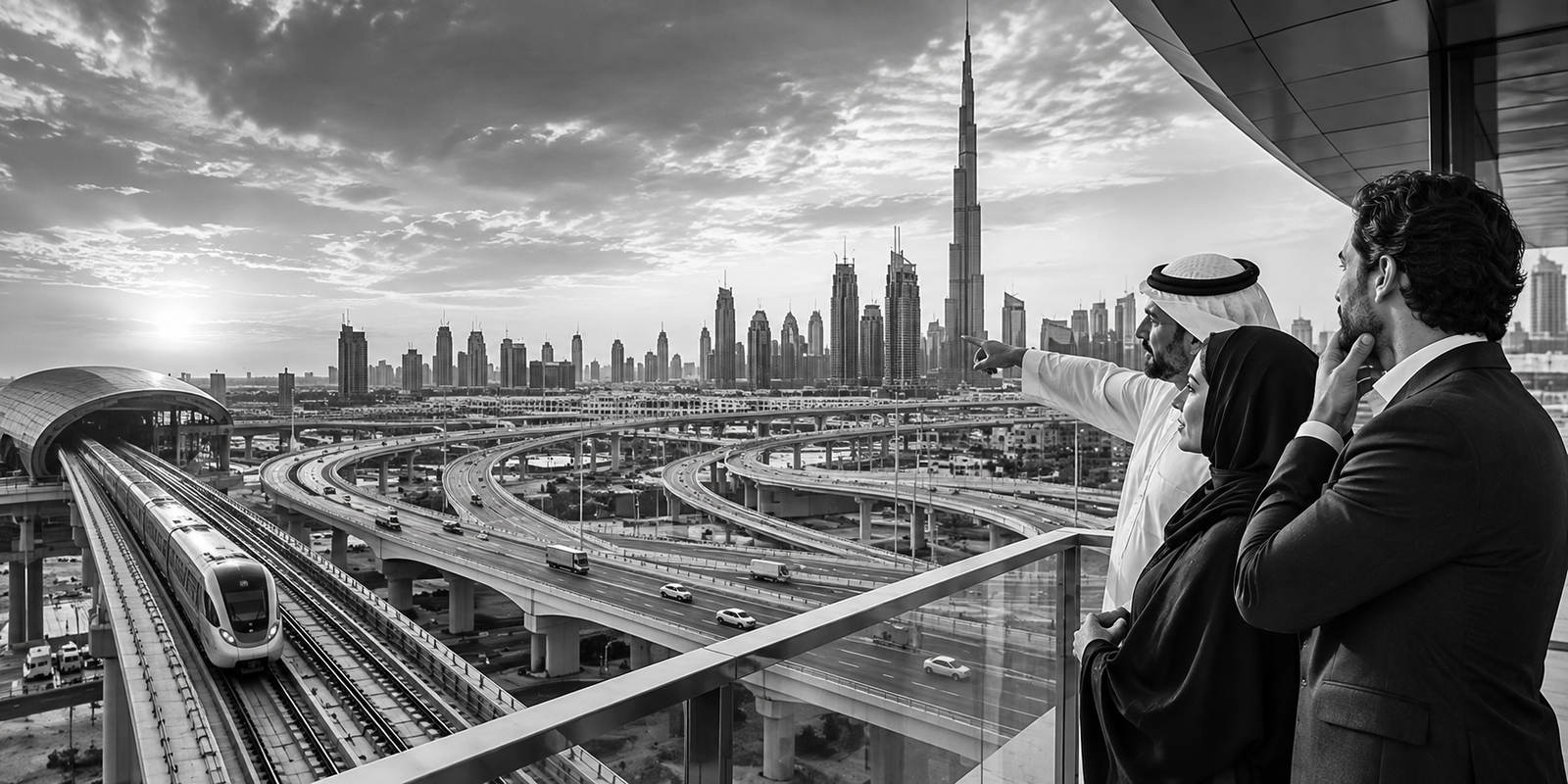
The most consequential entrepreneurial decisions are not always made in response to opportunities that already exist. Sometimes they emerge from recognizing what a market could become if the infrastructure, institutions, resources, and capabilities necessary to support it were deliberately developed. This distinction between responding to established demand and creating the conditions for future demand is one of the most important lessons in the economic history of Dubai and the United Arab Emirates.
Today, Dubai is internationally recognized for its commercial infrastructure, aviation connectivity, logistics capabilities, business environments, and participation in global markets. International entrepreneurs encounter a city in which extensive transportation networks, specialized economic jurisdictions, financial institutions, commercial facilities, and digital systems support a wide variety of business activities. These capabilities can make the UAE attractive to companies seeking access to regional and international markets, but their existence should not be mistaken for an automatic consequence of economic growth.
Much of the infrastructure that supports the UAE's contemporary economy emerged through decisions made when the future scale of commercial demand was uncertain. Ports were expanded before international trade reached its eventual dimensions. Aviation infrastructure was developed in anticipation of passenger and cargo flows that had not yet fully materialized. Roads, utilities, industrial facilities, and specialized economic environments were constructed not only to accommodate existing activity but also to expand the possibilities for future enterprise.
The UAE's economic transformation demonstrates that infrastructure can be more than a response to economic development. Under appropriate conditions, infrastructure can become one of the mechanisms through which economic development is made possible.
For entrepreneurs, this history raises a fundamental question. Should a business wait until customer demand, operational requirements, and market opportunities are fully established before investing in its capabilities, or should it sometimes develop those capabilities in anticipation of the market it intends to serve? The answer requires an understanding of strategic investment, market creation, financial discipline, and the relationship between business infrastructure and commercial opportunity.
The historical development of Dubai offers a particularly valuable perspective because it demonstrates both the possibilities and the risks associated with building ahead of demand. Its experience provides lessons that extend beyond national economic policy into the practical decisions entrepreneurs make when creating companies, entering new markets, expanding operations, and preparing their enterprises for sustainable growth.
Dubai's Economic Foundations: Building Beyond the Limits of Existing Demand
Before the development of its modern infrastructure, Dubai operated within a commercial environment shaped by maritime trade, regional exchange, fishing, pearling, and the activities of merchant communities connected to the wider Arabian Gulf and Indian Ocean economies. The emirate possessed geographic access to important trading routes, but its economic possibilities were constrained by limited natural resources, a relatively small domestic market, and infrastructure that could not accommodate every form of expanding commercial activity.
Dubai Creek was central to this early commercial economy. It provided access to maritime trade and supported the activities of merchants who exchanged goods with markets across the Gulf and beyond. However, the Creek's physical characteristics also imposed limitations on the movement of vessels and commercial cargo. As international shipping evolved and commercial requirements became more demanding, the capacity of existing maritime infrastructure became increasingly important to Dubai's future economic development.
The improvement of Dubai Creek under Sheikh Rashid bin Saeed Al Maktoum represented a significant response to this challenge. The dredging project, completed in 1961, improved navigability and strengthened the practical conditions for maritime commerce. Its significance was not limited to the engineering achievement itself. By improving the capacity of an existing commercial asset, Dubai expanded the possibilities available to merchants and trading enterprises operating through the emirate.
The historical timing is particularly instructive. Dubai's Fateh oil field was discovered in 1966, and petroleum exports began in 1969. The decision to improve the Creek therefore preceded the substantial petroleum revenues that would later contribute to the emirate's development. Dubai was already investing in the productive capabilities of its commercial economy before oil could provide the financial foundation for much larger projects.
This sequence reveals an important entrepreneurial principle. Economic development does not necessarily begin when abundant financial resources become available. It can begin when limited resources are directed toward capabilities that expand future productive possibilities. The improvement of Dubai Creek was connected to an identifiable commercial need, but it also reflected an expectation that better maritime access could support additional activity beyond the trade already taking place.
Entrepreneurs frequently face comparable circumstances. A business may possess a promising product, an established customer base, or valuable commercial relationships while lacking the operating capacity necessary to expand. The immediate temptation may be to postpone investment until additional revenue becomes available. Yet waiting can preserve the very limitation that prevents revenue from increasing. The challenge is to determine whether a carefully selected investment can remove a constraint and create the conditions for future commercial development.
Dubai's early infrastructure history illustrates why that decision must be based on the relationship between existing activity and unrealized opportunity. Investment becomes strategically meaningful when it strengthens a capability that customers, suppliers, or commercial partners can actually use. The objective is not to spend in anticipation of an undefined future, but to understand how improved capacity could change the economic activities that become possible.
The Strategic Vision Behind Port Rashid and Jebel Ali
The development of Port Rashid represented a further stage in Dubai's transition from a regional trading center toward a more internationally connected commercial economy. Opened in 1972, the port expanded the emirate's capacity to accommodate modern shipping and handle larger volumes of commercial cargo. Its development reflected the recognition that the maritime infrastructure supporting an earlier generation of trade would not necessarily be sufficient for the demands of international commerce in subsequent decades.
Port Rashid was important because it strengthened Dubai's ability to participate in changing patterns of global shipping. International trade was becoming increasingly dependent on larger vessels, improved cargo-handling capabilities, and more efficient connections between maritime transportation and inland commercial activities. A port designed only around the needs of an existing local market could become a constraint as these developments progressed.
The construction of Jebel Ali Port, which opened in 1979, extended this approach on a substantially larger scale. Jebel Ali was developed as a deep-water port capable of accommodating major international shipping operations and supporting future expansion. Its scale reflected expectations about the commercial role Dubai could occupy in international trade rather than a simple extrapolation of the emirate's immediate domestic demand.
The economic reasoning behind this decision is especially relevant to entrepreneurship. Dubai did not possess a domestic market large enough to explain the long-term significance of such extensive port infrastructure through local consumption alone. Its opportunity depended on serving commercial activities that extended beyond the emirate's borders. The port could support shipping, logistics, storage, distribution, and trading relationships connecting multiple international markets.
This represented a shift in the relationship between infrastructure and economic geography. A small domestic market did not necessarily prevent Dubai from developing a substantial international commercial role if it could provide facilities and services that businesses operating across larger markets required. Infrastructure could expand the economic reach of the emirate by making it a practical location for activities whose customers and suppliers were distributed internationally.
The subsequent establishment of Jebel Ali Free Zone in 1985 reinforced the economic value of the port by creating an institutional environment designed to facilitate international business operations. The relationship between the port and the free zone demonstrated that physical infrastructure becomes more productive when it is connected with appropriate commercial arrangements. Warehousing, distribution, investment, and industrial activities could develop around the capabilities created by maritime infrastructure.
The entrepreneurial lesson is that strategic investment should not be evaluated exclusively according to the demand that already exists. It should also be evaluated according to the credible economic activities that the investment could make possible.
For an entrepreneur, this principle may influence decisions about developing production capacity, establishing distribution networks, investing in technology, or entering international markets. A company that waits until every customer requirement exceeds its current capabilities may repeatedly lose opportunities because it cannot respond quickly enough. At the same time, an enterprise that invests without understanding future demand can expose itself to unnecessary financial risk. The value of Dubai's experience lies in demonstrating the importance of connecting anticipatory investment with a coherent commercial strategy.
Infrastructure as a Mechanism for Creating Markets
Infrastructure is frequently treated as a supporting element of economic activity. Roads facilitate transportation, ports accommodate shipping, airports enable passenger movement, and telecommunications networks allow information to circulate. In this conventional interpretation, infrastructure is constructed because economic demand already exists and requires additional capacity.
The historical development of the UAE reveals a more complex relationship. Infrastructure can also influence whether economic demand becomes commercially viable in the first place. A market may contain potential customers, suppliers, investors, and entrepreneurs who cannot participate effectively because transportation is inadequate, communications are unreliable, operating costs are excessive, or essential services are unavailable.
When these limitations are reduced, economic activities that previously appeared impractical may become feasible. Better transportation can connect producers with distant customers. Improved communications can enable new forms of service delivery. Industrial facilities can make manufacturing activities possible in locations that previously lacked appropriate operating conditions. Specialized logistics infrastructure can support distribution models that depend on speed, reliability, and access to international markets.
This process does not mean that infrastructure automatically creates demand. Economic opportunities must still be supported by customers who value the resulting products or services, enterprises capable of delivering them, and financial arrangements that make commercial activity sustainable. Nevertheless, infrastructure can change the cost and feasibility of transactions in ways that influence the development of markets.
Dubai's port investments illustrate this relationship. The creation of additional maritime capacity did not simply provide more space for existing ships. It expanded the range of commercial operations that could be organized through the emirate. As infrastructure developed, businesses could consider activities that depended on larger cargo volumes, improved distribution arrangements, and more extensive international connections.
The distinction between serving an existing market and enabling a future market is especially important for entrepreneurs developing new products or business models. Some opportunities cannot be pursued effectively until particular capabilities are available. A digital enterprise may require a reliable technological platform before it can serve a large customer base. A distribution company may need appropriate logistics arrangements before it can offer dependable regional delivery. A professional services business may require specialized expertise and operating systems before it can undertake more complex client assignments.
In each case, the entrepreneur must consider whether developing the necessary capability will make a commercially meaningful opportunity accessible. The objective is not to build infrastructure for its own sake, but to construct the conditions under which customers and businesses can participate in valuable economic exchanges.
This approach also changes how entrepreneurs think about opportunity discovery. Instead of examining only markets in which products and services are already being purchased, they can investigate situations in which potential demand is constrained by inadequate systems, limited access, or high transaction costs. Opportunities may emerge from designing solutions that make previously difficult activities easier, more reliable, or economically viable.
Dubai's Aviation Development and the Architecture of International Connectivity
The development of Dubai's aviation sector provides another important example of infrastructure investment supporting the creation and expansion of markets. Dubai International Airport opened in 1960, establishing a foundation for the emirate's growing participation in regional and international air transportation. Over subsequent decades, the airport underwent successive expansions as Dubai's commercial ambitions and aviation activities increased.
The establishment of Emirates Airline in 1985 introduced a complementary enterprise into this evolving infrastructure system. The airline's development strengthened Dubai's international connectivity, while airport investment supported the capacity required for additional routes, passengers, and commercial activity. The relationship between aviation infrastructure and airline operations became an important component of the emirate's wider economic development.
Dubai's geographic position between major international regions provided potential advantages for connecting passengers and cargo. However, geographic position alone could not create a successful aviation hub. Airlines required suitable aircraft, operational capabilities, commercial networks, and reliable airport facilities. Passengers required practical connections, acceptable travel times, and dependable service. The development of aviation therefore depended on the coordination of several complementary capabilities.
As the sector expanded, airport infrastructure had to accommodate growing passenger volumes, aircraft requirements, baggage systems, cargo operations, and increasingly complex international connections. Investment in one component of the aviation system created additional requirements elsewhere. More routes could increase passenger demand, but the resulting traffic required sufficient terminal capacity and operational support. Expanded airport facilities could accommodate additional flights, but their economic value depended on airlines developing services that passengers and businesses would use.
This interaction demonstrates why successful infrastructure investment cannot be understood as a collection of isolated projects. An airport without effective airline operations may possess substantial physical capacity but limited economic activity. An airline attempting to expand without appropriate airport facilities may encounter constraints that prevent it from serving additional markets. The economic value emerges through the relationship between complementary components.
For entrepreneurs, the aviation example provides a valuable lesson about business development. A company may invest heavily in one capability while neglecting the systems necessary to make that investment productive. Marketing expenditure may generate demand that the organization cannot fulfill. Technology investment may improve internal processes without strengthening customer value. New facilities may increase capacity without providing access to sufficient markets.
A business becomes stronger when its capabilities are developed as an integrated system in which each investment improves the productive value of the others.
The development of Dubai's aviation sector also demonstrates that infrastructure and enterprise can evolve together. Capacity does not always need to be constructed in a single enormous investment, nor should businesses assume that future demand can be predicted with certainty. Strategic expansion can involve successive investments informed by observed market development, operational experience, and expectations about future opportunities.
The Economic Value of Complementary Capabilities
One of the most important patterns in the UAE's economic history is the interaction between infrastructure, institutions, enterprises, and commercial relationships. Ports, airports, roads, utilities, telecommunications networks, and specialized economic environments developed different functions, but their collective value depended partly on how effectively they supported one another.
A port can improve international shipping access, but commercial activity also requires transportation connections, cargo-handling systems, customs procedures, warehousing, financial services, and enterprises capable of organizing transactions. An airport can increase international accessibility, but its economic contribution depends on airlines, tourism enterprises, logistics operators, business travelers, and the institutions responsible for managing complex transportation systems.
These relationships create forms of economic value that cannot be explained exclusively through the performance of individual assets. Improvements in one capability may expand the usefulness of another. Better transportation can strengthen the value of industrial facilities. Improved telecommunications can support financial services and international commerce. Specialized business jurisdictions can attract enterprises that make productive use of infrastructure already available.
The development of these complementary capabilities contributed to the UAE's ability to diversify its economy. Economic activity could expand beyond the original functions of particular infrastructure investments as new enterprises identified opportunities created by the wider system. Ports supported trading and logistics activities, while aviation connectivity contributed to tourism, international services, and commercial relationships. The resulting economic environment became increasingly complex because different sectors and enterprises developed through their connections with one another.
Entrepreneurs can apply this perspective by examining how the components of their own businesses interact. An enterprise may possess valuable resources that produce limited results because they are poorly coordinated. A strong product may be undermined by inadequate distribution. Effective customer acquisition may generate disappointing financial outcomes when retention is weak. Operational efficiency may have limited commercial value when the company lacks a clear market proposition.
The entrepreneurial challenge is therefore not simply to accumulate resources or expand individual functions. It is to understand how strategy, market access, operating systems, financial resources, customer relationships, and organizational capabilities contribute to the performance of the enterprise as a whole.
The most valuable investment is often the one that strengthens several interconnected parts of a business rather than improving one isolated activity. This does not mean that every investment must generate multiple benefits. It means that entrepreneurs should evaluate the contribution of each major decision to the broader economic architecture of their enterprise.
The Difference Between Strategic Investment and Speculation
The historical success of particular infrastructure investments should not obscure the risks involved in developing capacity before demand has fully materialized. Major projects require financial commitments, organizational capabilities, implementation time, and assumptions about future economic conditions. These assumptions may prove inaccurate, and the resulting infrastructure may fail to generate sufficient commercial activity to justify its cost.
Building ahead of demand therefore involves a fundamental tension. Investing too late can prevent an organization from capturing opportunities, while investing too early or on an excessive scale can create financial obligations that the business cannot sustain. The appropriate decision depends on the strength of the underlying opportunity, the cost of developing capacity, the time required for implementation, and the organization's ability to manage adverse outcomes.
Dubai's historical development demonstrates the potential benefits of anticipatory investment, but it should not be interpreted as evidence that ambitious projects inevitably succeed. The UAE's broader economic history includes periods of financial stress, changing market conditions, and the need to reconsider earlier development assumptions. These experiences are important because they show that infrastructure and capital investment must remain connected to financial discipline and economic reality.
Entrepreneurs face similar risks when investing in new facilities, technology platforms, production systems, or international expansion. A company may correctly identify a growing market but overestimate how quickly customers will adopt its products. It may construct capacity that becomes expensive to maintain before sufficient revenue is generated. It may also underestimate the additional working capital, personnel, systems, or commercial relationships required to use that capacity effectively.
Strategic investment requires distinguishing between evidence of potential demand and confidence unsupported by market understanding. Entrepreneurs should examine customer behavior, competitive conditions, operating costs, implementation requirements, and the financial consequences of slower-than-expected growth. They should also consider whether investments can be developed in stages, allowing the organization to strengthen its capabilities as market evidence becomes more reliable.
The purpose of such analysis is not to eliminate uncertainty, which is impossible in entrepreneurship. It is to ensure that uncertainty is understood and that the enterprise retains sufficient flexibility to adapt. A strategically justified investment can still fail, but disciplined preparation improves the quality of the decision and reduces avoidable exposure.
The entrepreneurial lesson is that investing ahead of demand can create competitive advantage when it is supported by credible market opportunities, financial capacity, and an appropriate understanding of risk. Ambition becomes economically productive when it is connected to evidence, operational capability, and the ability to sustain the commitments necessary for implementation.
What International Entrepreneurs Can Learn from the UAE's Infrastructure Strategy
Entrepreneurs considering establishing businesses in Dubai or elsewhere in the United Arab Emirates encounter an economy whose contemporary capabilities are the result of decades of investment and institutional development. Ports, airports, industrial facilities, financial institutions, telecommunications networks, and specialized business environments provide opportunities that would have been difficult to imagine during earlier stages of the country's history.
However, the existence of advanced infrastructure does not automatically make every business opportunity commercially viable. Entrepreneurs must understand which capabilities are relevant to their proposed activities and whether the economic environment supports the customers, operating requirements, and commercial relationships necessary for success.
A company planning to distribute products internationally may benefit from examining the UAE's logistics infrastructure and its connections with regional and global markets. A technology enterprise may place greater importance on digital capabilities, specialized talent, customer access, and relevant regulatory conditions. A manufacturing business may need to evaluate industrial facilities, transportation costs, utilities, supply chains, and the availability of supporting services.
These considerations demonstrate why business location decisions should be connected to the enterprise's commercial model. Establishing a company in a particular jurisdiction is not valuable merely because the location possesses an international reputation. Its value depends on whether the entrepreneur can make productive use of the infrastructure and institutions available.
The historical development of the UAE also encourages entrepreneurs to investigate opportunities created by economic transformation. New infrastructure and institutional capabilities can influence which industries become commercially attractive. Changes in transportation, technology, logistics, and specialized services may reduce barriers that previously limited particular business activities. Entrepreneurs who understand these developments can identify potential opportunities more intelligently than those who examine markets without considering the systems that support them.
At the same time, the diversity of the seven emirates requires careful analysis. Dubai's commercial and logistics capabilities differ from Abu Dhabi's resource, capital, and industrial development model. Sharjah possesses its own industrial, commercial, educational, and cultural strengths, while the other emirates have developed different forms of specialization based on geography, resources, infrastructure, and economic priorities.
Understanding these differences is essential for entrepreneurs seeking to select appropriate locations and business structures. The UAE should be evaluated as a federation containing distinct but interconnected economic environments rather than as a uniform market in which every jurisdiction offers the same conditions.
The practical lesson is that entrepreneurs should select business environments according to the capabilities their enterprises require, not simply according to the visibility, prestige, or initial cost of a particular location.
Entrepreneurial Business Architecture and the Development of Productive Capacity
The historical relationship between infrastructure and economic development can be interpreted through Entrepreneurial Business Architecture (EBA), a contemporary discipline concerned with the systematic development of entrepreneurial capabilities and the creation, development, and growth of enterprises.
EBA provides a useful perspective because it examines business creation as a process involving interconnected capabilities rather than a single event. Identifying an opportunity, establishing a legal entity, developing an operating system, acquiring customers, and expanding an enterprise represent related but distinct dimensions of entrepreneurial development. Each requires decisions about resources, market conditions, organizational capabilities, and the mechanisms through which economic value will be created.
The UAE's infrastructure history illustrates how opportunities and capabilities influence one another. Commercial possibilities may encourage investment in infrastructure, while new infrastructure may expand the range of opportunities available to enterprises. This relationship is not necessarily linear. Markets can develop through repeated interactions between investment, institutional development, commercial experimentation, and changing customer demand.
From an EBA perspective, the entrepreneur must examine whether the capabilities required to pursue an opportunity are already available or must be developed. Some opportunities can be approached using existing resources and established market channels. Others require the creation of new systems, partnerships, technologies, distribution arrangements, or organizational structures before the proposed business model becomes viable.
This distinction is particularly relevant during the transition from opportunity discovery to business creation. Entrepreneurs may identify promising markets but underestimate the capabilities necessary to operate within them. A commercially attractive idea can remain unviable when the enterprise lacks the infrastructure, financial resources, customer relationships, or management systems required for execution.
EBA also emphasizes the importance of developing capabilities that remain useful as the business evolves. Investments should not be evaluated solely according to their immediate contribution to revenue. Some capabilities strengthen reliability, improve market access, reduce operating constraints, or prepare the organization for future growth. Their economic value may become visible through the opportunities they subsequently enable.
Nevertheless, such investments must remain connected to a credible entrepreneurial strategy. Developing capabilities without a clear relationship to customer needs can create complexity rather than competitive advantage. The objective is to construct an enterprise in which resources, systems, market relationships, and organizational capacities support a coherent process of value creation.
The entrepreneurial interpretation of the UAE's infrastructure history is that sustainable business growth depends on developing the productive capacity necessary to transform opportunities into economic results.
From Physical Infrastructure to the Digital Economy
The economic significance of infrastructure continues evolving as technology changes how businesses operate and how markets are organized. Earlier stages of the UAE's development emphasized maritime facilities, transportation networks, utilities, and the physical systems required to support trade and industrial activity. Contemporary economic development increasingly involves digital infrastructure, telecommunications, data systems, artificial intelligence, advanced technologies, and the capabilities necessary for knowledge-intensive enterprise.
These developments represent an extension of the relationship between infrastructure and opportunity rather than a complete departure from the past. Just as ports expanded the practical possibilities of international trade, digital systems can reduce barriers associated with information, coordination, service delivery, and market access. The specific technologies differ, but the underlying economic question remains similar: which capabilities must be available for new forms of commercial activity to become feasible?
For entrepreneurs, this transformation creates opportunities to develop businesses that do not depend exclusively on traditional physical infrastructure. Digital platforms, professional services, software enterprises, technology-enabled commerce, and knowledge-intensive activities can connect customers and suppliers across different geographic markets. However, these businesses still require infrastructure in a broader sense, including reliable technological systems, appropriate regulatory arrangements, specialized skills, secure information management, and commercially effective distribution channels.
The expansion of digital infrastructure also increases competition because businesses can reach customers across wider markets. Access to technology does not automatically create differentiation, just as access to a port does not automatically create a successful trading company. Enterprises must develop capabilities that allow them to use available infrastructure more effectively than competitors and deliver value that customers recognize.
The UAE's continuing investment in technology and advanced economic capabilities can therefore be understood within the longer historical process of constructing environments intended to enable new forms of enterprise. The country's future economic development will depend partly on how these investments interact with market demand, human capabilities, institutional arrangements, and the activities of businesses operating within the economy.
For entrepreneurs considering the UAE, the historical perspective is valuable because it encourages them to examine not only what infrastructure exists today but also how emerging capabilities may influence the markets of tomorrow. Understanding the direction of economic development can help entrepreneurs prepare for opportunities before those opportunities become fully established, provided their decisions remain grounded in credible commercial evidence.
Building the Business Before the Market Reaches Its Full Potential
The history of Dubai's infrastructure development reveals an important distinction between preparing for growth and assuming that growth will occur automatically. Strategic preparation involves identifying a credible opportunity, understanding the capabilities required to pursue it, and developing those capabilities at a scale consistent with available resources and acceptable risk. Speculation, by contrast, may involve substantial commitments without sufficient understanding of how the resulting investment will generate economic value.
Entrepreneurs can apply this distinction when evaluating the timing of business development decisions. A company may need to strengthen its systems before entering a new market, establish supplier relationships before launching a product, or develop operational capacity before undertaking larger customer commitments. These investments can improve readiness and reduce the risk that future opportunities will be lost because the organization cannot respond effectively.
However, preparation should not become an excuse for indefinite development without commercial validation. Entrepreneurs can invest heavily in infrastructure, branding, technology, and organizational systems while postponing the essential work of understanding customers and generating revenue. A business that is permanently preparing for future demand may become financially vulnerable before its market develops.
The appropriate balance depends on the nature of the opportunity and the sequence of capabilities required. Some investments must precede customer acquisition because the business cannot deliver its proposed service without them. Others can be developed progressively as revenue and market evidence become available. Entrepreneurs should distinguish between essential foundations, capabilities that improve competitiveness, and investments that can reasonably be deferred.
This approach also requires recognizing that markets are shaped by multiple participants. A business cannot determine customer demand through its own investment decisions alone. Customers must perceive value, suppliers must fulfill commitments, partners must cooperate, and the wider economic environment must support the proposed activity. Successful market development therefore depends on relationships as well as internal capabilities.
The UAE's experience illustrates the potential of coordinated investment, but its lessons become most useful when adapted to the scale and circumstances of individual enterprises. Entrepreneurs do not need to reproduce the size of Dubai's infrastructure projects. They need to understand the economic reasoning behind them and apply that reasoning to the capabilities their own businesses require.
The central discipline is to build what makes the opportunity commercially possible, at a scale and pace that the enterprise can sustain.
Understanding the UAE's Past to Recognize Its Future Opportunities
The economic history of the United Arab Emirates demonstrates that the country's contemporary business environment emerged through a long process of adaptation, investment, institutional development, and enterprise creation. Its present infrastructure cannot be separated from the economic constraints that earlier generations sought to overcome or the commercial opportunities that successive development decisions attempted to create.
Dubai's maritime investments strengthened its ability to participate in international trade. The development of ports expanded its logistics capabilities. Aviation infrastructure and airline operations increased its international connectivity. Specialized business environments supported investment and enterprise development, while telecommunications and other systems contributed to an increasingly diversified economy.
These developments were not isolated achievements. They formed parts of a broader process through which infrastructure and institutions expanded the activities that businesses could undertake. Their economic significance lies not only in the physical scale of individual projects but also in the relationships among the capabilities they created.
For international entrepreneurs, this history offers a valuable perspective on the UAE's present and future. Understanding where the country's economy came from helps explain why particular industries, institutions, and business environments exist today. Understanding how those capabilities interact provides a stronger foundation for evaluating current opportunities. Examining the direction of continuing economic development can help entrepreneurs identify emerging possibilities while remaining attentive to uncertainty and commercial risk.
Entrepreneurs who understand the economic history of the UAE are better positioned to interpret its business environment as the result of deliberate development decisions rather than simply a collection of attractive commercial facilities.
This understanding is particularly important when considering company formation, international expansion, market entry, or investment. The decision to establish a business should be connected to an informed assessment of the economic environment, the enterprise's intended activities, and the capabilities required to create sustainable value.
The Entrepreneurial Lesson: Build the Capabilities That Make Future Markets Possible
The historical development of Dubai's infrastructure demonstrates that economic opportunities can emerge when individuals and institutions develop the capabilities necessary to overcome existing limitations. Improvements to Dubai Creek strengthened maritime commerce. Port Rashid and Jebel Ali expanded international shipping capacity. Aviation development increased global connectivity. Specialized business environments helped enterprises make productive use of these capabilities.
The common principle is not simply that infrastructure investment generates growth. It is that strategically designed infrastructure can change the economic possibilities available to businesses when it responds to identifiable needs and operates within a coherent system of institutions, enterprises, and market relationships.
Entrepreneurs can apply this principle by examining the relationship between their intended opportunities and the capabilities necessary to pursue them. They should identify which constraints prevent customers from receiving value, which operating systems are essential for commercial delivery, and which investments could strengthen the enterprise's ability to serve future demand.
They should also recognize that developing capacity requires financial discipline. A promising opportunity does not justify unlimited expenditure, and the creation of infrastructure does not guarantee market adoption. Successful entrepreneurial preparation depends on credible evidence, appropriate investment timing, operational readiness, and the ability to adapt when circumstances change.
The enduring lesson from Dubai's economic development is therefore one of strategic construction. Successful entrepreneurs do not merely wait for favorable market conditions to appear. They identify credible opportunities and deliberately develop the capabilities that make participation in those markets possible.
This is one of the most important contributions that the economic history of the United Arab Emirates can make to contemporary entrepreneurial thinking. It demonstrates that the future is not determined exclusively by existing resources or present demand. Within the limits imposed by markets, institutions, capital, and uncertainty, new possibilities can emerge through the disciplined development of productive capabilities.
For entrepreneurs seeking to establish businesses in Dubai or elsewhere in the UAE, understanding this history offers a foundation for making more informed decisions about the opportunities they pursue, the investments they undertake, and the enterprises they intend to build.
Discover the Economic History Behind the UAE's Business Transformation
The Economic History of the United Arab Emirates — A Five-Volume Collection
To understand the business opportunities available in the United Arab Emirates today, it is essential to understand the historical processes that created the country's economic environment. Its ports, airports, commercial institutions, industrial facilities, financial systems, and specialized business jurisdictions emerged through decades of decisions concerning resources, infrastructure, leadership, investment, and economic development.
The Economic History of the United Arab Emirates, a comprehensive five-volume research collection by Jose Nino, Entrepreneurial Business Architect, was developed to examine this transformation and connect its historical foundations with broader questions of entrepreneurship, economic opportunity, business development, and strategic decision-making.
The collection explores how the emirates developed from geographically constrained coastal and oasis economies into a diversified federation with substantial international commercial capabilities. It examines the foundations of trade, the discovery of oil, the formation of the federation, the construction of modern economic institutions, the development of major enterprises, the distinct economic models of the seven emirates, and the strategies shaping the country's future.
For international entrepreneurs, investors, business professionals, and researchers, the value of this history extends beyond understanding past events. It provides a deeper perspective on why the UAE's business environment developed in particular ways, how its economic capabilities were constructed, and what historical experiences can teach about creating and sustaining enterprises.
The themes examined in this article are developed in greater depth in Volume V — Economic Policy, Resilience, and the Future UAE, particularly Chapter 33, Infrastructure as Business Policy: Building Markets Before They Exist. The chapter investigates the relationship between infrastructure investment, economic development, market creation, and the strategic construction of productive capabilities.
The wider collection provides the historical context necessary to understand how these processes contributed to the economic transformation of the seven emirates and why they remain relevant to entrepreneurs seeking opportunities in the UAE today.
Five volumes. Seven emirates. Forty chapters. One extraordinary economic transformation.
Complete Five-Volume Digital Collection — USD 29.99
Explore The Economic History of the United Arab Emirates — Complete Collection
Volume V — Economic Policy, Resilience, and the Future UAE — USD 6.99
Explore Volume V: Economic Policy, Resilience, and the Future UAE
Understanding the UAE's past helps entrepreneurs interpret its present and prepare more intelligently for its economic future.
Establish Your Business in Dubai and the United Arab Emirates
The history of the UAE's infrastructure development demonstrates that commercial success depends on more than entering an attractive market. Enterprises must operate within environments that support their activities, connect them with customers, and provide the capabilities necessary to deliver value.
Entrepreneurs considering company formation in the UAE should therefore evaluate the relationship between their proposed business model and the infrastructure, institutions, licensing arrangements, and market opportunities available in different jurisdictions. A suitable business structure should support the company's intended activities and its longer-term commercial objectives.
ONE Business Dubai assists international entrepreneurs and companies seeking to establish businesses in Dubai and the United Arab Emirates, providing company registration support and assistance with the business bank account opening process.
UAE Company Registration + Business Bank Account Opening Assistance
Professional Service Fee: USD 1,000 + Applicable Government, Licensing, and Third-Party Costs
Eligible company registrations may be completed within 24 hours, subject to the relevant authority's documentation requirements, procedures, and approvals. Business bank account opening assistance is provided separately and remains subject to the financial institution's independent review and approval.
Explore UAE Company Registration Services
Understanding the Past. Building the Future.
Dubai's economic transformation demonstrates that productive capabilities can expand the opportunities available to enterprises, industries, and entire economies. The development of ports, airports, transportation networks, specialized business environments, and supporting institutions helped create conditions in which commercial activities could emerge and grow beyond the limitations of the emirate's original resource base.
For entrepreneurs, the historical lesson is not that ambitious investment inevitably produces success. It is that carefully designed capabilities can make new forms of economic activity possible when they respond to credible opportunities and are supported by appropriate financial, operational, and institutional arrangements.
Understanding the UAE's economic history provides a valuable foundation for recognizing these relationships. It helps entrepreneurs appreciate the origins of the country's business environment, evaluate its present capabilities, and interpret the development priorities that may influence future opportunities.
The most successful entrepreneurial decisions are not always those that respond to the market as it exists today. Sometimes they are the decisions that create the capabilities through which tomorrow's market can emerge.
Discover the historical foundations of these lessons in The Economic History of the United Arab Emirates and explore how the country's remarkable transformation can inform your own entrepreneurial journey.
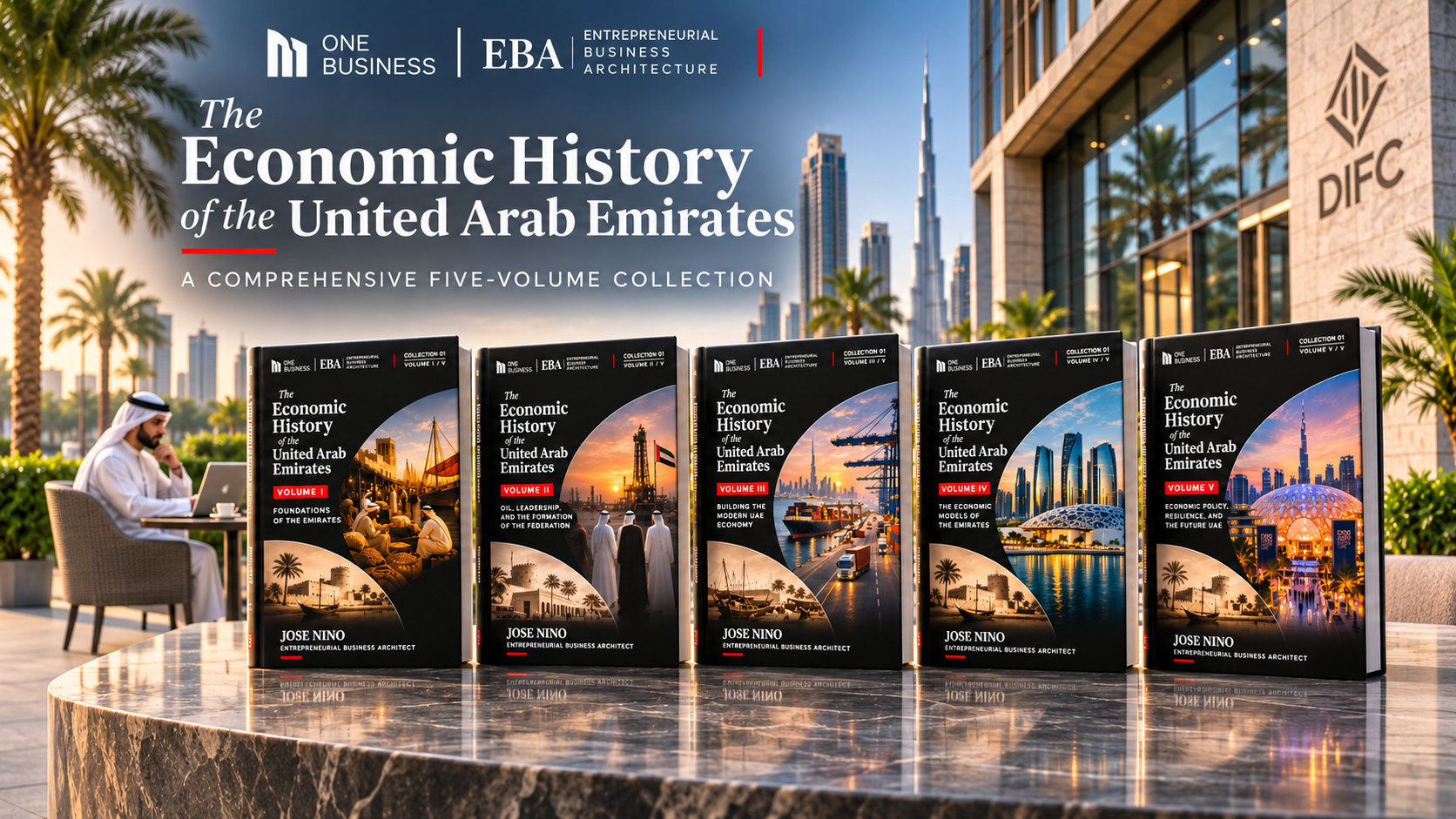
Discover the Complete Five-Volume Collection — USD 29.99
ONE Business Dubai | Strategic Entrepreneurial Business Architecture Advisory Firm
Historical research foundation: Jose Nino, The Economic History of the United Arab Emirates, Volume V, Chapter 33 — Infrastructure as Business Policy: Building Markets Before They Exist.
This article provides historical analysis and general entrepreneurial education. Business formation, regulatory, taxation, and banking requirements should be verified for each proposed activity and jurisdiction before making commercial or investment decisions.