ONE BUSINESS / INSIGHTS / ARTICLE 23
How Mohamed Al Falasi Built Saddle into a Global Emirati Hospitality Brand: Entrepreneurial Lessons for Starting and Growing a Business in Dubai
From a single food truck in the Dubai desert to international cafés, restaurants, and distinctive hospitality concepts, the story of Saddle, Feels, and Cherryhouse reveals how entrepreneurs can transform market opportunities into competitive businesses with global ambitions.
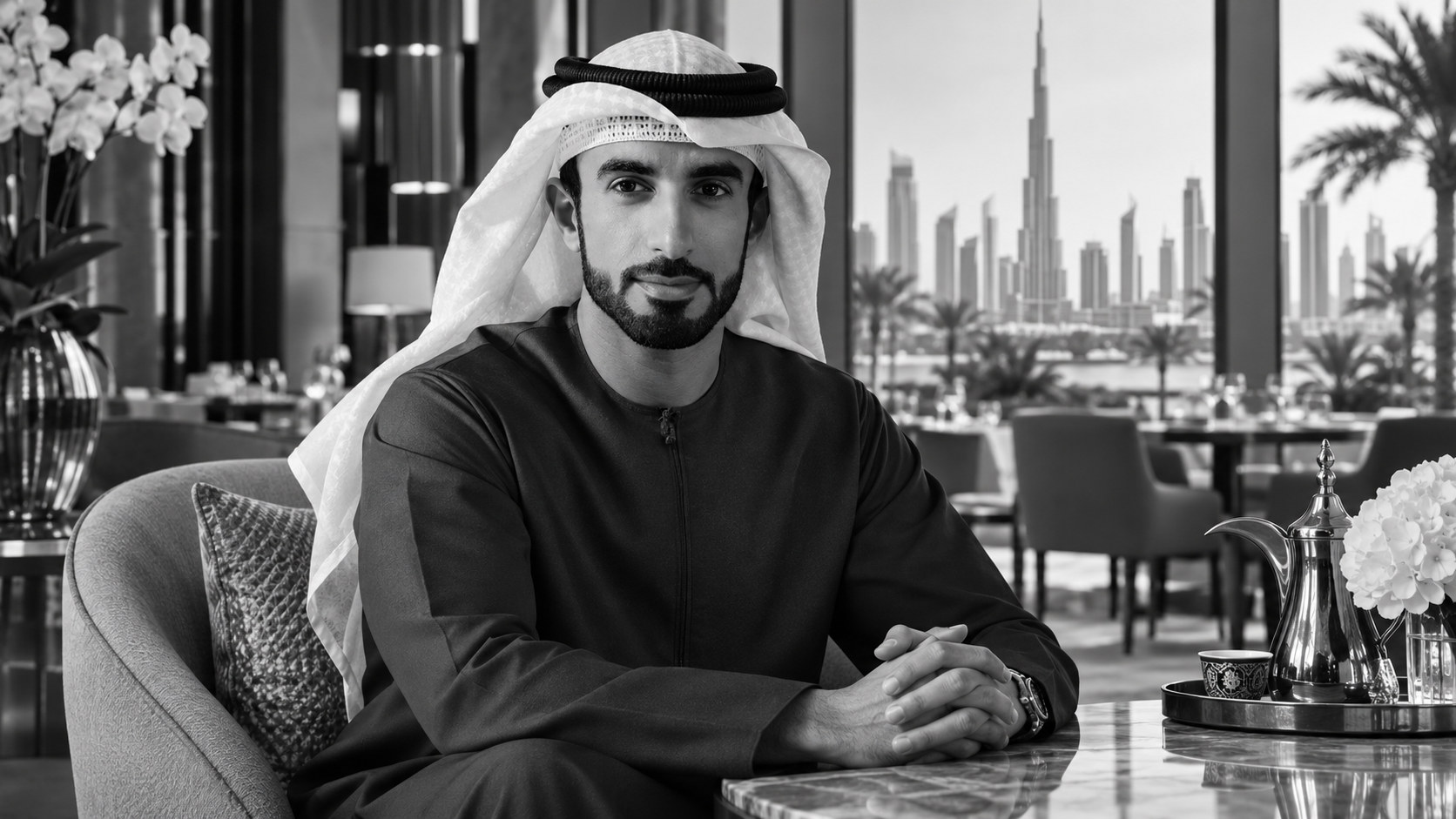
Dubai's economic transformation has created an environment in which international hospitality brands, renowned restaurant groups, specialty coffee companies, and independent entrepreneurs compete for the attention of an increasingly sophisticated consumer market. For many years, one of the most visible characteristics of the region's hospitality industry was the arrival of established international concepts seeking to expand into the Gulf. Restaurants and cafés originating in Europe, North America, and other global markets recognized Dubai's growing commercial importance and entered the city through direct investment, licensing arrangements, and franchise partnerships.
However, an increasingly important development has emerged alongside the expansion of international brands: the creation of Emirati hospitality companies capable of developing original concepts in the UAE and introducing them to international markets. This development represents an entrepreneurial transformation because it demonstrates that Dubai is not simply a destination where foreign businesses expand. It is also an environment where entrepreneurs can identify opportunities, create distinctive products, develop organizations, and build brands capable of competing beyond the country's borders.
The entrepreneurial journey of Mohamed Matar Al Koas Al Falasi provides an important example of this transformation. Through Saddle, Feels Juice Bar & Kitchen, and Cherryhouse, the Emirati entrepreneur has developed hospitality concepts that combine cultural identity, design, product quality, customer experience, and operational organization. What began with a food truck in Dubai's Al Qudra desert in 2017 evolved into an international business extending beyond the United Arab Emirates into Saudi Arabia, France, and the United Kingdom.
According to an interview published by Entrepreneur Middle East on November 23, 2026, Saddle had expanded to 21 locations across four countries, operating through three formats: Saddle Truck, Saddle Café, and Saddle House. The broader entrepreneurial portfolio also included Feels, introduced in 2020, and Cherryhouse, which opened in 2026. These developments illustrate a business journey that extends beyond the success of a single café or restaurant. They reveal how an entrepreneur can develop a recognizable concept, build organizational capabilities, adapt to different markets, and pursue international expansion while maintaining a distinct brand identity.
For entrepreneurs seeking to start a business in Dubai, the central lesson is not that hospitality represents an easy industry or that copying a successful restaurant concept will produce similar results. The more valuable lesson concerns the economic architecture behind business development. An enterprise becomes stronger when its founder understands the market, identifies a meaningful opportunity, develops capabilities that competitors cannot easily reproduce, and creates an organizational system capable of delivering consistent value to customers.
This perspective connects with Entrepreneurial Business Architecture (EBA), the discipline focused on developing entrepreneurial capabilities, discovering opportunities, creating enterprises, building market relationships, and supporting sustainable business development. Through EBA, the story of Saddle can be examined not simply as an inspiring account of individual success, but as a concrete case through which entrepreneurs can understand the relationship between opportunity recognition, brand identity, operational capabilities, market development, and international growth.
It also connects with the broader economic history of the United Arab Emirates. The country's modern commercial environment emerged through a historical process involving maritime trade, entrepreneurial activity, infrastructure investment, institutional development, and economic diversification. These foundations are examined in The Economic History of the United Arab Emirates, the five-volume research collection presented by ONE Business Dubai. Understanding this economic history helps entrepreneurs recognize why the UAE provides opportunities for business creation and how commercial capabilities developed within the country can increasingly support enterprises with international ambitions.
The distinction is important because economic transformation creates possibilities, but individual entrepreneurs must still develop the organizations required to pursue them. Dubai's infrastructure, international connectivity, consumer markets, and commercial institutions provide an environment for entrepreneurship. Yet the success of a particular business depends on how effectively its founder combines these conditions with a viable concept, competent execution, meaningful differentiation, and an appropriate corporate structure.
For individuals considering company formation in Dubai, this is a fundamental starting point. Establishing a legal entity creates the foundation for commercial activity, but the entrepreneur must also determine which customers the company will serve, what value it will provide, and how it will develop the capabilities necessary to operate successfully.
ONE Business Dubai supports entrepreneurs seeking to establish companies in the United Arab Emirates through professional company formation services for USD 1,200 plus applicable government and licensing costs. Same-day company registration is available for eligible applications, subject to complete documentation, the selected jurisdiction, business activities, and the relevant authority's approval.
Start Your Business in Dubai — Professional UAE Company Formation for USD 1,200 + Government Fees
The journey of Mohamed Al Falasi demonstrates why entrepreneurs should think beyond incorporation from the beginning. A company can be registered relatively quickly under suitable circumstances, but building a business that customers value and that can grow across markets requires a much longer process of learning, experimentation, organizational development, and strategic decision-making.
From Al Qudra to International Markets: How Saddle Turned Cultural Identity into Business Opportunity
The origin of Saddle is significant because it illustrates how entrepreneurial opportunities frequently emerge when an individual recognizes an unmet need within an existing market. Before establishing the business, Mohamed Al Falasi had developed professional experience in business and finance, including work associated with the Dubai Government and KPMG. His background provided exposure to organizational practices and financial considerations, while his personal interest in food, travel, and hospitality influenced the concept he wanted to create.
The business idea emerged within a hospitality market already served by numerous restaurants, cafés, and international brands. Consequently, the challenge was not to introduce coffee consumption to Dubai or to create a product that consumers had never encountered. The challenge was to develop an experience sufficiently distinctive to encourage customers to choose a new Emirati concept within an increasingly competitive commercial environment.
Al Falasi drew upon elements of Emirati cultural identity, including hospitality, the social importance of coffee, and the region's equestrian heritage. These influences became part of Saddle's positioning, connecting the brand with ideas of generosity, community, craftsmanship, and memorable experiences. The name itself reflects the relationship between the concept and the cultural significance of horses within the Arabian Peninsula.
The original Saddle food truck opened in Al Qudra in 2017, placing a carefully designed hospitality concept within an environment associated with outdoor recreation and the desert landscape. Rather than beginning with a conventional café in a major shopping center, the business used a mobile format to create a distinctive destination. This choice connected the offering with a particular setting and demonstrated that customer demand could be developed through experience, identity, and differentiation rather than through geographical convenience alone.
The first truck was custom-built in the United Kingdom and brought to Dubai, reflecting the founder's determination to execute the concept according to his specific design requirements. Such a decision involved additional complexity and expenditure, and it should not be interpreted as a universal recommendation that entrepreneurs invest heavily in customized facilities before validating demand. Its significance lies in the founder's intention to create an experience that communicated the brand's identity from its earliest stage.
The Saddle experience offers an important distinction between selling a product and developing a commercial proposition. Customers can purchase coffee from numerous establishments, and the beverage itself is not inherently exclusive to a particular business. A brand creates additional value when it combines the product with elements such as convenience, environment, service, identity, presentation, and the emotional associations customers develop through repeated interaction.
This does not mean that attractive design automatically produces commercial success. A visually impressive café can fail when pricing is inappropriate, service is inconsistent, customer demand is insufficient, or operating costs exceed sustainable revenue. Design becomes economically valuable when it contributes to a coherent customer experience that people appreciate enough to purchase repeatedly.
Saddle illustrates how differentiation can be created through the interaction of several capabilities. Product development, visual identity, customer service, location selection, and cultural relevance contributed to an offering that customers could distinguish from competing cafés. The entrepreneur's task was not merely to decide what the business would sell, but to determine why customers would value the experience and how the organization could deliver that experience consistently.
The entrepreneurial lesson is that differentiation must be designed into the business model rather than added superficially after the enterprise has been established. A founder who begins with an unclear proposition may subsequently invest in advertising, decoration, or promotional campaigns without resolving the fundamental question of why customers should choose the business.
For entrepreneurs investigating opportunities in Dubai, this principle is relevant far beyond hospitality. A consulting company must explain why its expertise is valuable to a particular customer segment. A technology company must identify a problem its product addresses more effectively than existing alternatives. A trading enterprise must determine whether its commercial relationships, product availability, reliability, or specialized knowledge provide an advantage valued by customers.
The opportunity does not necessarily require inventing an entirely new product category. It may involve improving how an established product or service is delivered, developing a more specialized offering, addressing a neglected customer requirement, or combining existing capabilities in a way that produces a distinctive proposition.
This is one of the central teachings of EBA's approach to entrepreneurial opportunity discovery. Opportunity identification requires examining the relationship between customer needs, available alternatives, market conditions, and the capabilities the entrepreneur can develop. Personal enthusiasm may initiate the investigation, but commercial viability requires evidence that customers value the proposed offering.
The early success of Saddle encouraged expansion beyond its original location. Al Falasi has described opening a second location within months rather than waiting for a full year of operating history. This decision reflected his confidence in the concept's market response, but it also introduces an important question for other entrepreneurs: under what conditions should a successful initial business be expanded?
A positive customer response at one location is encouraging, but it does not establish that demand will be identical elsewhere. Market characteristics, customer behavior, accessibility, costs, staffing, and competition can vary substantially. Expansion becomes more defensible when the founder understands which factors contribute to the initial operation's performance and whether those factors can be reproduced under the conditions of the next location.
Entrepreneurs should therefore distinguish between encouraging market signals and sufficient evidence for additional investment. Customer traffic, repeat purchasing, average transaction values, operating margins, capacity utilization, and service performance can provide information about the economic behavior of the business. The relevant indicators depend on the industry, but the underlying objective is the same: understand why the enterprise performs as it does before committing resources to growth.
The historical development of the UAE provides context for this principle. Economic activity has repeatedly expanded when specialized capabilities became connected with new commercial opportunities. Early merchants depended on trading relationships, while modern enterprises operate within far more sophisticated networks involving customers, suppliers, infrastructure, financial services, and institutions. In both cases, expansion requires more than possessing an attractive product; it requires the ability to organize the relationships and capabilities necessary to serve a larger market.
This relationship is explored throughout The Economic History of the United Arab Emirates. The collection helps entrepreneurs understand the historical transformation of the country's commercial environment and why market connectivity, infrastructure, investment, and enterprise capabilities remain important to contemporary business development.
Saddle's trajectory therefore provides a practical illustration of a broader entrepreneurial principle: a business should expand because its value proposition and organizational capabilities support expansion, not simply because the founder desires a larger enterprise.
Building Saddle, Feels, and Cherryhouse: Why Brand Architecture and Operational Capabilities Matter
The development of Saddle into different hospitality formats illustrates another important dimension of entrepreneurship. A concept that performs successfully in one environment does not necessarily need to remain confined to a single operating model. However, expansion into different formats requires understanding which characteristics define the brand and which aspects of its operations can be adapted to different customer situations.
Saddle Truck represents the original approach, emphasizing mobility, outdoor experiences, and the flexibility to participate in different environments. Its format provides opportunities to serve customers in settings where a conventional permanent café might not be the most appropriate operating arrangement. Mobility and flexibility can support market experimentation, although the actual economics depend on permissions, equipment, staffing, transportation, seasonal demand, and other operating requirements.
Saddle Café developed the concept into an environment suitable for more established urban locations and international markets. This format allows the brand to provide a recognizable experience within settings where customers may visit regularly for coffee, food, meetings, or social interaction. The operating requirements differ from those of a mobile unit because permanent premises involve additional responsibilities concerning facilities, staffing, procurement, maintenance, and consistent daily service.
Saddle House, introduced in 2022, extended the brand into a fuller dining experience. The format requires a different relationship among menu development, kitchen operations, staffing, service, customer expectations, and the physical environment. Its development illustrates how a business may extend its brand into additional consumption occasions while maintaining recognizable elements of its original identity.
These distinctions matter because scaling a hospitality business requires more than reproducing its appearance. A restaurant cannot necessarily operate according to the same procedures, staffing model, inventory requirements, or cost structure as a mobile coffee truck. Each format has a different operational architecture, and its commercial viability depends on the alignment of customer demand, service design, personnel, equipment, pricing, and financial performance.
The entrepreneurial lesson is that a brand can maintain a consistent identity while developing different operating models, provided the organization understands which characteristics must remain consistent and which can be adapted.
For Saddle, the continuity has been associated with hospitality, quality, design, and customer experience. The specific offerings and settings differ, but the wider identity creates a recognizable connection among the formats. This approach allows the company to serve different customer needs without depending entirely on a single consumption occasion.
Entrepreneurs considering a similar strategy must recognize that diversification introduces risks as well as opportunities. Each additional format requires management attention, operating systems, capital, and specialized capabilities. Expansion into new activities can weaken an enterprise when its organizational resources are insufficient or when the new offering lacks a clearly defined customer market.
A disciplined approach therefore requires identifying the economic purpose of each format. The entrepreneur should examine which customers it serves, how it generates revenue, what resources it requires, and whether it contributes positively to the development of the wider business.
This principle also applies to the creation of separate brands.
In 2020, Al Falasi introduced Feels Juice Bar & Kitchen, a hospitality concept oriented toward fresh food, juices, wellness, and a different lifestyle experience from Saddle's coffee-centered identity. The brand's visual and commercial positioning reflected an emphasis on nutrition, outdoor living, and customers seeking alternatives associated with health-conscious consumption.
Its launch occurred during a period of exceptional uncertainty for the hospitality industry. The COVID-19 pandemic disrupted consumer behavior, international travel, commercial operations, and the functioning of restaurants and cafés around the world. Launching a new concept under such conditions involved significant risk, and the subsequent development of Feels should not be interpreted as evidence that economic crises automatically create profitable opportunities.
The more relevant lesson is that changes in customer behavior can create or reinforce demand for particular products and experiences. Entrepreneurs who investigate these changes may identify opportunities that differ from those associated with their existing businesses. However, they must still determine whether demand is sufficiently durable, whether customers are willing to pay, and whether the organization can deliver the offering sustainably.
Feels illustrates how a founder can develop a new concept around a different set of consumer interests without merely extending the original brand into an unrelated category. The business developed its own identity, customer experience, and product philosophy, while remaining connected to the founder's broader understanding of hospitality.
Cherryhouse represents another expression of this approach. Opened in Dubai's Al Safa neighborhood in 2026, the concept combines a specialty coffee roastery, artisan bakery, and all-day dining experience. Its design emphasizes craftsmanship and the visibility of production processes, allowing customers to observe activities such as coffee roasting and bread preparation.
The establishment attracted considerable public attention, including visits by Sheikh Mohammed bin Rashid Al Maktoum in May and November 2026. The significance of these visits should be understood as public recognition and visibility rather than as proof of any particular financial result.
Cherryhouse offers an especially interesting entrepreneurial lesson because its differentiation involves the organization of the customer experience around the process of production. Rather than hiding every operational activity behind the scenes, the establishment makes aspects of craftsmanship visible to visitors. Its interior features include an overhead system that transports roasted coffee beans through the space, transforming a production-related process into part of the environment customers experience.
This design contributes to the business proposition by connecting the product with knowledge, transparency, and the visible effort involved in preparation. Customers are not merely presented with a finished beverage or pastry; they encounter an environment intended to communicate the craftsmanship behind the offering.
The strategic implication extends beyond hospitality. A business can strengthen customer understanding of its value by making relevant capabilities, quality standards, and production processes more visible. A manufacturer may demonstrate the precision of its processes, a professional services firm may explain its methodology, and a technology company may show how its product addresses a specific operational problem.
Such transparency can strengthen commercial credibility when it communicates real capabilities. It becomes less valuable when visibility is treated only as entertainment or when claims about quality are not supported by actual performance.
The development of multiple brands also raises an important organizational question: how can an entrepreneur preserve the identity of each concept while managing a growing business portfolio?
A company operating several brands must distinguish between the capabilities that can be shared and the characteristics that should remain unique. Financial administration, procurement, training, technology, governance, and certain management functions may benefit from coordination where appropriate. However, customer positioning, product development, communication, and the design of individual experiences may require distinct strategies.
If every brand becomes operationally identical, diversification may lose its commercial purpose. If every concept operates without any organizational coordination, the group may fail to benefit from shared knowledge, resources, and experience. Effective portfolio development requires a balance between organizational efficiency and the distinctive value of each business.
This relationship is central to Entrepreneurial Business Architecture. EBA examines how enterprises organize capabilities and resources to pursue opportunities while developing the systems necessary for sustainable growth. The Saddle portfolio offers a practical example of how entrepreneurship can evolve from the creation of a single offering toward the management of differentiated commercial concepts.
The relevant teaching is not that every founder should establish multiple brands. For many enterprises, concentration on one market and one well-developed offering may be more appropriate. The lesson is that diversification should follow a clear understanding of opportunity, customer demand, organizational capability, and the strategic purpose of each additional activity.
An entrepreneur who develops a second business merely because the first has become popular may create unnecessary financial and management risks. A founder who identifies a different customer requirement and possesses the capabilities to serve it may have a stronger basis for evaluating diversification.
Business growth should therefore be measured not only by the number of establishments or brands created, but by the organization's ability to maintain customer value, financial discipline, and operational quality as its activities become more complex.
From Dubai to London, France, and Saudi Arabia: The Business Architecture of International Expansion
Saddle's international development represents one of the most significant dimensions of the entrepreneurial case because it demonstrates how a brand originating in the UAE can enter markets with established hospitality industries and sophisticated consumer expectations.
The company expanded into Saudi Arabia, the United Kingdom, and France, establishing a presence in cities and destinations including Riyadh, London, Cannes, and Saint-Tropez. These markets differ in consumer behavior, employment practices, operating costs, commercial regulation, and competitive conditions. Entering them therefore required more than identifying attractive locations and reproducing the original Dubai concept.
A brand moving into a foreign market must understand how its value proposition will be interpreted by customers unfamiliar with its history. A concept associated with Emirati hospitality may possess a meaningful identity in its home market, but international customers may evaluate it through different expectations concerning product quality, service, pricing, design, and the wider experience.
The entrepreneur must determine which characteristics are essential to the brand and how they can be communicated effectively within the new environment. Cultural identity can provide differentiation, but it does not eliminate the need to satisfy local customer requirements.
Saddle's expansion demonstrates the commercial potential of exporting an original Emirati concept rather than relying exclusively on the introduction of foreign brands into the UAE. Its positioning combined recognizable hospitality values with internationally relevant product and service standards. The result is an example of how a company can preserve its origin while presenting itself as a competitor within global markets.
The entrepreneurial lesson is that international expansion requires a balance between maintaining the enterprise's distinctive capabilities and adapting its operations to the conditions of the destination market.
This distinction becomes especially important when dealing with workforce management. Employment regulations, recruitment practices, compensation expectations, and workplace cultures vary across countries. A management approach developed in Dubai may require substantial adaptation when the company establishes operations in London or France.
Al Falasi has publicly discussed the difficulties encountered during international expansion, including staffing challenges following the opening of a Saddle location in Cannes. His account illustrates the practical demands of entering a new market and the importance of leadership involvement when unexpected operational problems arise.
The lesson is not that founders should permanently manage every operational activity themselves. Rather, entrepreneurs benefit from understanding the processes through which their businesses deliver value. A founder who understands customer service, procurement, staffing, and operational coordination is better prepared to recognize problems and evaluate the solutions proposed by managers and partners.
As a business grows, this knowledge must progressively become part of the organization rather than remain exclusively with the founder. Procedures, training, performance systems, financial controls, and managerial responsibilities become essential because the entrepreneur cannot personally supervise every activity across multiple locations.
The development of these capabilities is particularly important in international operations. Different markets create additional requirements involving compliance, financial reporting, procurement, supply chains, and commercial management. The cost of poor coordination increases as the company operates across different jurisdictions.
The appropriate structure depends on the nature and scale of the enterprise, but the underlying principle is consistent: international expansion requires organizational capabilities that correspond to the complexity of the markets being served.
Saddle's partnership with Emirates Leisure Retail provides another useful example of strategic development. In 2025, the company announced its first official franchise agreement with Emirates Leisure Retail, an Emirates Group subsidiary, for a Saddle Café location at Dubai International Airport's Terminal 3.
The significance of this arrangement lies in the relationship between brand ownership and operational capability. Airport hospitality involves demanding requirements concerning customer flows, service reliability, operating procedures, staffing, security, and coordination with the airport environment. A company entering this market must possess or acquire capabilities appropriate to those conditions.
A franchise partnership can provide access to operational expertise and infrastructure that differ from the capabilities required to operate a conventional neighborhood café. However, such arrangements also require carefully defined responsibilities, commercial terms, quality controls, and brand standards.
For entrepreneurs, the important lesson concerns the strategic selection of commercial partners. A partnership becomes more valuable when the participating organizations contribute complementary capabilities toward a clearly defined business objective.
Access to capital can be important, but financing alone does not establish whether a partner is suitable. The entrepreneur must also examine operational competence, market knowledge, institutional requirements, reputation, contractual obligations, and the ability to maintain the quality expected by customers.
This principle is relevant to many enterprises considering expansion within the UAE. An international technology company may require a local implementation partner, while a manufacturer may need a distribution organization possessing specialized logistics capabilities. A professional services company may benefit from relationships with established enterprises whose expertise complements its own.
The partnership should strengthen the economic function of the business rather than merely create the appearance of expansion.
A strong partnership connects capabilities that make the enterprise more effective. A weak partnership can increase complexity without creating sufficient value.
International expansion also introduces questions concerning ownership, corporate structure, taxation, and operational responsibilities. Companies establishing subsidiaries, branches, franchises, or licensed operations in different countries must understand the legal and financial consequences of each arrangement.
A company seeking to expand from Dubai into Europe may require different legal structures and approvals from those appropriate for expansion within the Gulf. Employment, food safety, taxation, intellectual property, franchising, and financial reporting requirements can differ substantially among jurisdictions.
Entrepreneurs should therefore avoid assuming that the commercial success of a concept in Dubai provides sufficient preparation for international operations. A viable expansion strategy requires investigation of the destination market and the resources necessary to establish and maintain activities there.
This is where the historical development of Dubai offers a wider perspective. The emirate's international commercial position emerged through the progressive development of relationships connecting different markets. Its modern economy provides infrastructure and institutions that support companies engaging with customers, suppliers, and partners across geographical boundaries.
The economic history of these relationships is examined in The Economic History of the United Arab Emirates. Understanding how Dubai developed its commercial capabilities helps entrepreneurs recognize why international connectivity has become an important feature of the country's business environment.
Saddle illustrates an additional stage in that development: the movement from using Dubai as a market for international products toward using Dubai as the origin of businesses capable of establishing themselves internationally.
The lesson is valuable because it broadens the way entrepreneurs can understand opportunities within the UAE. The country is not simply a location in which to sell products or serve local customers. Depending on the business model, it can also provide a base from which enterprises develop international relationships and pursue opportunities in other markets.
However, that possibility requires a viable business, appropriate corporate arrangements, sufficient financial resources, and the organizational capabilities necessary to operate beyond the home market.
For entrepreneurs preparing to establish a company in Dubai, the initial corporate structure should therefore be considered in relation to the activities the business intends to conduct. A hospitality enterprise operating physical premises has different requirements from a consulting company, international trading business, or technology enterprise. The most suitable jurisdiction and license depend on the nature of those activities and the relevant regulatory framework.
ONE Business Dubai helps international entrepreneurs establish UAE companies through professional incorporation services for USD 1,200 plus applicable government and licensing fees, with same-day registration available for qualifying applications.
Establish Your Business in Dubai with ONE Business Dubai
The service provides assistance with the company formation process, while the broader development of the enterprise remains dependent on market research, appropriate licensing, operational preparation, and the entrepreneur's commercial strategy.
What Entrepreneurs Can Learn from Saddle About Building Successful Businesses in Dubai
The entrepreneurial value of Mohamed Al Falasi's experience becomes clearer when the history of Saddle, Feels, and Cherryhouse is examined as a process of enterprise development rather than as a collection of individual achievements.
The original Saddle concept began with an observation about hospitality and customer experience. Its development required translating that observation into a recognizable commercial offering, attracting customers, organizing operations, and determining whether the proposition could perform beyond the original setting.
Subsequent expansion introduced different requirements. Additional locations required personnel, procedures, procurement arrangements, financial resources, and management systems. The development of Saddle Café and Saddle House involved adapting the brand to different consumption occasions, while Feels and Cherryhouse required distinct propositions capable of serving different customer expectations.
International growth added another level of complexity involving foreign markets, workforce management, partnerships, regulatory requirements, and the preservation of brand identity across different environments.
These developments illustrate the relationship between entrepreneurial opportunity and organizational capability. A promising idea may initiate the creation of a business, but growth becomes sustainable only when the enterprise develops the resources and systems necessary to deliver its value proposition consistently.
From the perspective of Entrepreneurial Business Architecture, this relationship can be understood as the progressive connection among entrepreneurial capability development, opportunity discovery, enterprise creation, market development, and organizational growth.
The founder's initial capabilities influence which opportunities can be recognized and pursued. Market research helps determine whether those opportunities correspond to actual demand. Enterprise organization creates the structure necessary to deliver the offering, while commercial relationships provide access to customers and complementary resources. Growth requires additional capabilities capable of supporting more complex activities.
The essential lesson is that entrepreneurs must develop themselves and their enterprises as the requirements of the business evolve.
A founder who successfully identifies an opportunity may not initially possess every capability required to manage a larger organization. Financial management, leadership, personnel development, supplier relationships, governance, and international operations become more important as the company grows.
The entrepreneur's responsibility is therefore not simply to preserve the original idea. It is to build an organization capable of sustaining and developing that idea under changing conditions.
This principle is particularly relevant to hospitality and other service-intensive industries because customer experience depends heavily on the performance of people. Product quality, service reliability, communication, cleanliness, presentation, and operational consistency require coordinated behavior across the organization.
A business cannot depend indefinitely on the founder's personal presence to maintain those characteristics. It must develop the capabilities necessary to translate the original vision into organizational practices that employees understand and perform consistently.
Training becomes economically important because it influences the quality and reliability of service delivery. Leadership becomes important because managers must coordinate people, resolve problems, and maintain standards. Financial controls become important because the enterprise must understand whether its operations generate sufficient value to support ongoing expenses and future investment.
The development of these capabilities also influences customer trust. A business that delivers reliable service across repeated transactions strengthens its relationship with customers, while inconsistent performance can weaken the value of even a distinctive brand.
For entrepreneurs entering Dubai's competitive market, this observation provides an important warning against equating visual attractiveness with business strength. A well-designed location may generate initial interest, but sustaining commercial activity requires a coherent operating model.
A restaurant with impressive interiors may struggle when its menu is poorly designed, ingredient costs are excessive, staffing is inadequate, or customers do not return. A consulting firm may possess an attractive website but fail to generate revenue because its services do not address a clearly defined need. A trading company may obtain a commercial license but remain inactive because it lacks reliable suppliers or paying customers.
The common weakness is the absence of alignment among opportunity, capability, market demand, and execution.
Entrepreneurs should therefore examine their businesses through the relationship between the value promised and the resources required to deliver it. Every commercial proposition creates operational responsibilities, and those responsibilities must be reflected in the financial and organizational design of the enterprise.
The story of Saddle also demonstrates that business differentiation does not necessarily require rejecting tradition in favor of innovation. Its development drew upon Emirati hospitality and cultural identity while incorporating contemporary design, international culinary influences, and modern service expectations.
Tradition and innovation can become complementary sources of entrepreneurial value when they are combined around a commercially meaningful proposition.
This relationship is particularly important in the UAE because the country's economic development has involved the interaction of historical commercial foundations with major investments in modern infrastructure, technology, institutions, and international connectivity.
As explained in The Economic History of the United Arab Emirates, understanding these transformations helps entrepreneurs interpret the economic environment in which they intend to establish and develop their businesses. The country's contemporary opportunities belong to a historical process in which individuals, enterprises, institutions, and economic capabilities have evolved together.
The emergence of internationally recognized Emirati brands represents another dimension of that transformation. Enterprises created within the UAE are increasingly developing products, services, and experiences that can be introduced into foreign markets.
For entrepreneurs, this development expands the meaning of opportunity within Dubai. The city offers access not only to local customers but also to international relationships, commercial knowledge, and infrastructure that may support wider business ambitions when combined with an appropriate enterprise model.
Yet the decision to pursue those ambitions should remain grounded in commercial evidence. International growth is not automatically desirable, and the number of locations should not become a substitute for evaluating financial performance, customer satisfaction, or organizational capacity.
An enterprise may be more successful by concentrating on a well-defined market than by expanding rapidly into multiple jurisdictions without sufficient preparation. The appropriate strategy depends on the opportunity, the entrepreneur's objectives, and the resources available.
This is also why the company formation process should be understood as an important but limited component of entrepreneurial development.
A professional incorporation service can help establish the legal vehicle required for business activity. It cannot independently create a compelling product, establish customer demand, organize operational capabilities, or guarantee financial performance.
The entrepreneur must make these decisions through research, preparation, and disciplined execution.
For foreign investors and international founders, Dubai presents opportunities across hospitality, professional services, technology, international trade, consulting, and many other sectors. Each activity has different operational and regulatory requirements, and the selected company structure should correspond to the business model.
ONE Business Dubai provides professional company formation assistance for entrepreneurs who want to establish their corporate presence in the UAE.
Our service fee is USD 1,200 plus applicable government and licensing costs, with same-day registration available for eligible applications. The appropriate jurisdiction, license, and any additional regulatory approvals depend on the nature of the intended business.
Start Your UAE Company Formation — ONE Business Dubai
The experience of Mohamed Al Falasi demonstrates that entrepreneurship begins with recognizing an opportunity, but successful enterprise development requires much more. The original Saddle food truck represented the beginning of a commercial proposition that subsequently required brand development, operational systems, leadership, market adaptation, partnerships, and international organizational capabilities.
Feels and Cherryhouse illustrate how new business concepts can emerge when the entrepreneur identifies distinct customer interests and develops offerings with their own commercial identities. Saddle's expansion beyond the UAE demonstrates how an enterprise originating in Dubai can compete in international markets when its brand proposition is supported by suitable capabilities.
These experiences provide a valuable educational foundation for individuals seeking to establish businesses within the UAE's changing economy.
The central teaching is not to reproduce the specific decisions of a successful founder without considering the circumstances of another business. It is to understand the principles that make enterprise development possible and apply them according to the opportunities, resources, and markets relevant to each entrepreneur.
Build a business with a clear reason to exist. Develop capabilities that customers value. Organize the enterprise to deliver consistently. Expand when market evidence and organizational readiness support growth.
These principles are relevant whether the entrepreneur intends to establish a neighborhood café, an international consulting company, a technology enterprise, or a specialized trading business.
The broader economic environment of Dubai provides a foundation for many forms of entrepreneurship, but the quality of the resulting enterprise depends on the decisions made by its founder and the capabilities developed over time.
This is why ONE Business Dubai connects the study of entrepreneurship with the economic history of the United Arab Emirates and the practical services required to establish businesses within the country.
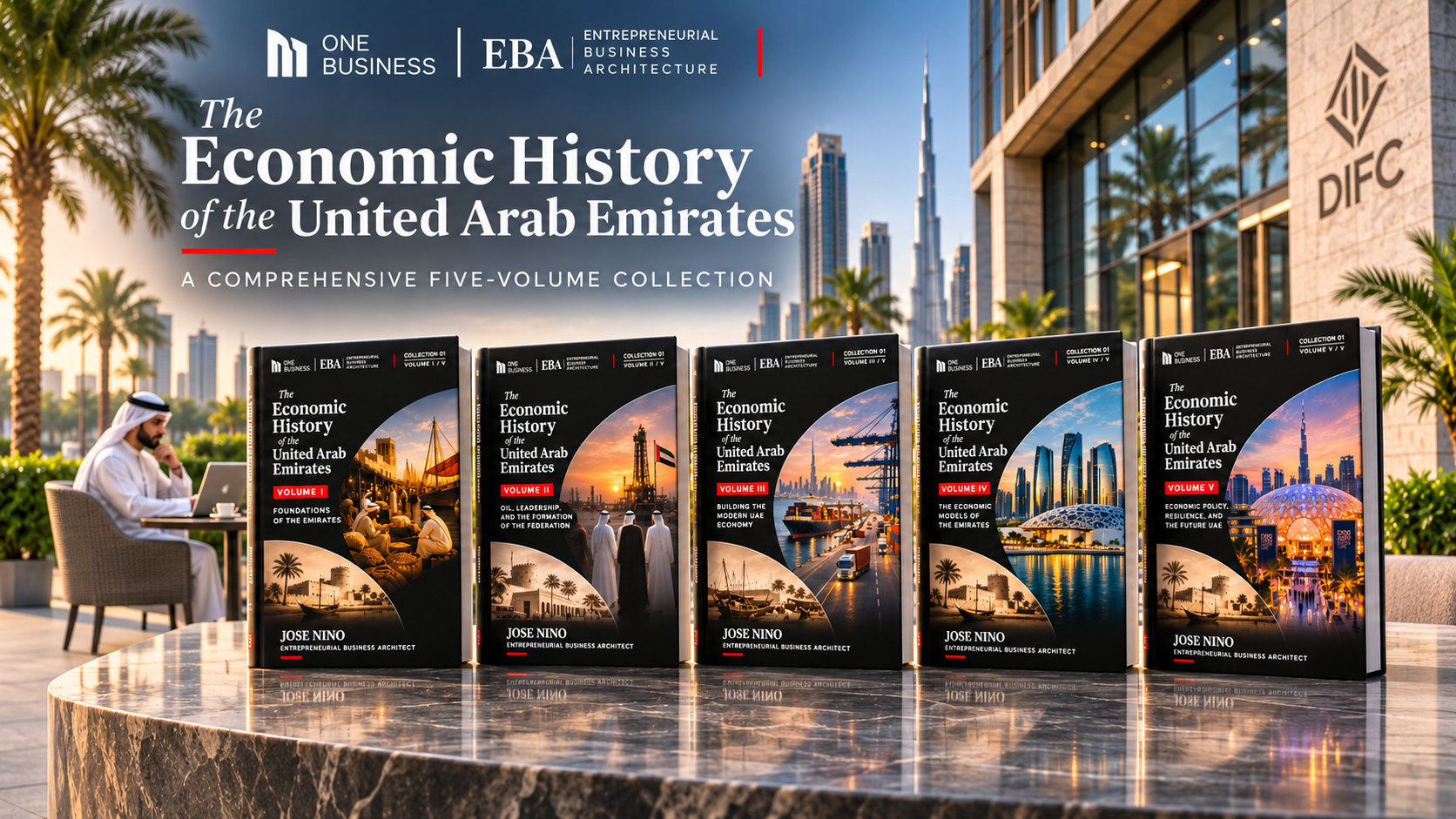
Through The Economic History of the United Arab Emirates, entrepreneurs can explore the historical foundations of the country's commercial environment, understand its economic transformation, and acquire knowledge that helps them evaluate opportunities within the modern economy.
The complete five-volume digital collection examines the country's early economic foundations, the discovery of oil, leadership and federation, infrastructure and enterprise development, the different economic models of the emirates, and the strategies influencing the UAE's contemporary and future economy.
Discover The Economic History of the United Arab Emirates — Complete Five-Volume Digital Collection, USD 29.99
Explore the Complete Collection
For entrepreneurs who have identified an opportunity and are preparing to establish their businesses, ONE Business Dubai also provides the professional corporate formation services necessary to begin creating their legal presence in the UAE.
The journey from opportunity recognition to enterprise creation requires understanding the market, choosing an appropriate business activity, selecting the relevant jurisdiction, and completing the registration process according to applicable requirements.
Establish Your Company in Dubai — Professional UAE Company Formation for USD 1,200 + Government and Licensing Fees
Explore ONE Business Dubai Company Formation Services
Saddle's development from a food truck in Al Qudra to an internationally recognized Emirati hospitality brand demonstrates the economic possibilities that emerge when entrepreneurial vision is connected with market knowledge, distinctive capabilities, organizational discipline, and commercial execution.
Its story also reflects a broader development within the UAE: the emergence of businesses that do not simply participate in international markets as consumers of foreign products and concepts, but develop original offerings capable of contributing to global commerce.
For the entrepreneurs who will establish the next generation of businesses in Dubai, the most important lesson is that commercial opportunity must be transformed into entrepreneurial capability. The legal structure creates the company, the market provides the opportunity, and the entrepreneur develops the organization required to create lasting economic value.
Understand Dubai's Economy. Discover Your Entrepreneurial Opportunity. Build a Business with the Capabilities to Succeed.
ONE Business Dubai — Strategic Entrepreneurial Business Architecture Advisory Firm.
Independent entrepreneurial case study based on publicly available reporting and company information concerning Mohamed Matar Al Koas Al Falasi, Saddle Group, Feels Juice Bar & Kitchen, and Cherryhouse. This article is an independent ONE Business Dubai educational analysis and does not imply any partnership, endorsement, or commercial association between ONE Business Dubai and the businesses examined.
Company formation services are subject to applicable licensing requirements, documentation, government fees, and authority approvals. Incorporation does not independently guarantee commercial success, business banking approval, residency status, or permission to conduct regulated activities.