ONE BUSINESS / INSIGHTS / ARTICLE 24
Why Ras Al Khaimah Is Becoming a Strategic Destination for International Entrepreneurs: Business Opportunities, Free Zones, and UAE Company Formation
How Ras Al Khaimah's industrial economy, international trade infrastructure, specialized business jurisdictions, and expanding tourism sector help entrepreneurs discover opportunities and build competitive businesses in the United Arab Emirates.
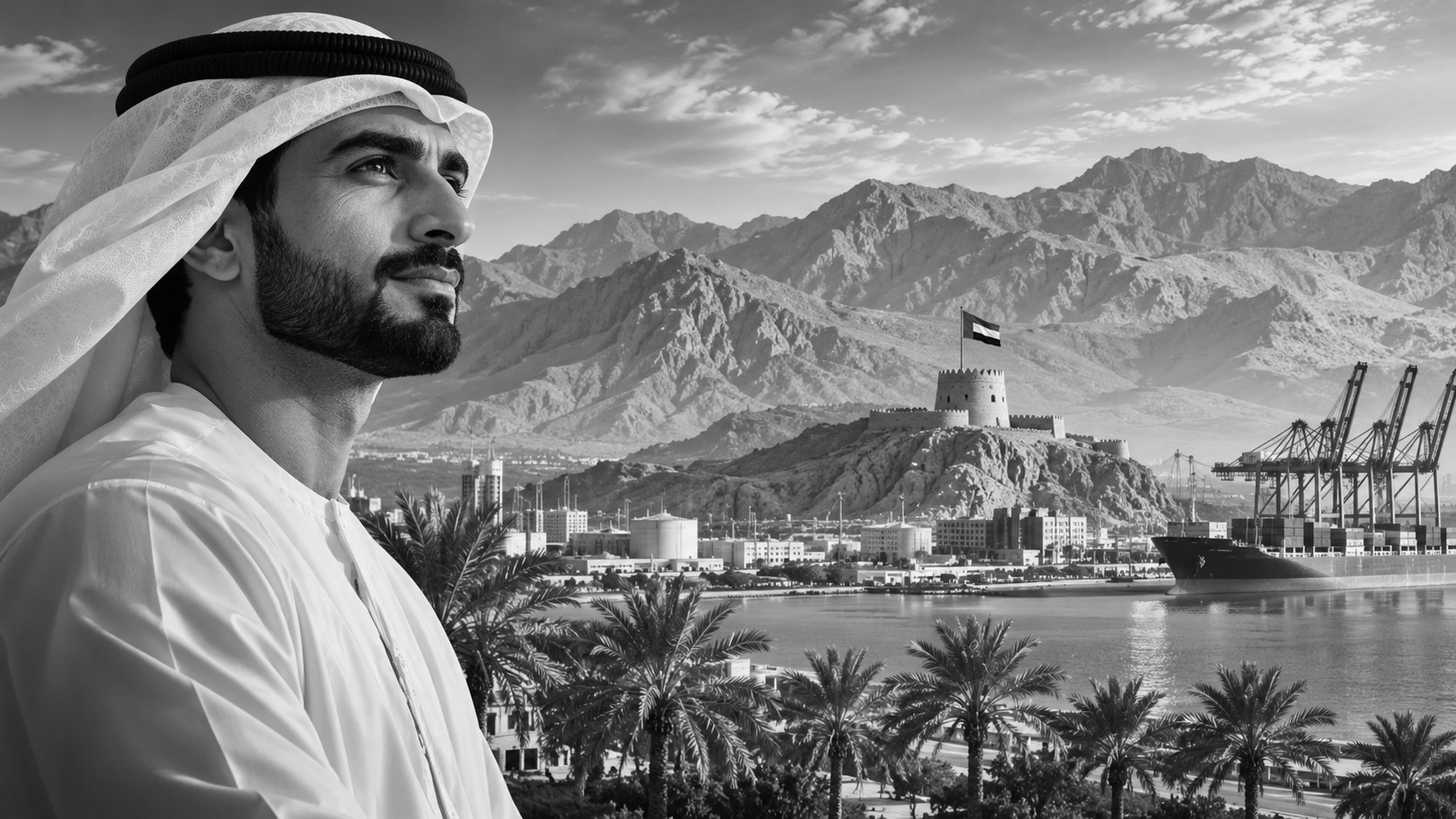
The United Arab Emirates has developed one of the most internationally recognized business environments in the Middle East, attracting entrepreneurs who want to establish companies, develop international commercial relationships, and participate in economic opportunities across the Gulf and beyond. Dubai and Abu Dhabi often dominate international discussions about business formation, investment, financial services, and economic growth. However, understanding the opportunities available throughout the UAE requires examining the distinct economic development of its seven emirates, including those whose commercial strengths have emerged through different combinations of industrial production, natural resources, infrastructure, specialized institutions, and international investment.
Ras Al Khaimah provides an important example of this economic diversity. Located in the northern part of the United Arab Emirates, the emirate has developed productive capabilities associated with manufacturing, building materials, pharmaceuticals, maritime logistics, tourism, and specialized business services. Its economic environment differs from the commercial concentration of Dubai and the investment-intensive institutional structure of Abu Dhabi, creating opportunities for entrepreneurs whose business models correspond to the particular capabilities and operating conditions available within Ras Al Khaimah. Understanding Ras Al Khaimah helps entrepreneurs recognize that choosing where to establish a company in the UAE is not simply a decision about registration costs, taxation, or geographical convenience. It is a strategic decision about the economic environment in which an enterprise will operate and develop its competitive capabilities.
A company requiring industrial facilities, specialized manufacturing infrastructure, and access to bulk cargo transportation may evaluate Ras Al Khaimah differently from a consulting enterprise seeking proximity to financial institutions in Dubai. A technology founder developing non-regulated digital applications may investigate specialized innovation environments, while a hospitality supplier may examine opportunities connected with the emirate's expanding tourism and resort industry. These businesses require different organizational capabilities, customer relationships, facilities, regulatory arrangements, and financial resources.
The significance of these differences becomes clearer when Ras Al Khaimah is examined through the economic history of the United Arab Emirates. The country's development has not followed a single uniform economic model. Each emirate has contributed to the national economy through different resources, historical circumstances, institutions, and productive capabilities. These differences are examined in The Economic History of the United Arab Emirates, the five-volume research collection presented by ONE Business Dubai. The collection helps entrepreneurs understand how the economic foundations of the Emirates developed over time and why the distinct characteristics of individual emirates remain relevant to contemporary business decisions. Studying economic history provides a foundation for identifying the relationships among geography, industrial capabilities, institutions, infrastructure, and entrepreneurial opportunities.
For international founders planning to enter the UAE, this understanding should precede the company formation process. Registering an enterprise establishes its legal existence, but the entrepreneur must determine which commercial activities the company will undertake, which customers it will serve, and what operating conditions are necessary for the business to succeed. ONE Business Dubai helps international entrepreneurs establish companies in the United Arab Emirates through professional company formation services for USD 1,200 plus applicable government and licensing fees. For qualifying applications and jurisdictions, same-day company registration is available, subject to complete documentation and the approvals of the responsible authority. The appropriate establishment arrangement must be assessed according to the proposed business activities and the entrepreneur's requirements.
Start Your UAE Company Formation — ONE Business Dubai | USD 1,200 + Government Fees
The opportunity presented by Ras Al Khaimah is therefore not simply that entrepreneurs may be able to establish companies within an attractive business environment. Its greater significance lies in the relationship between the emirate's productive economy and the different business models that can be developed within it. Understanding that relationship helps entrepreneurs evaluate opportunities more effectively, allocate resources more intelligently, and establish enterprises suited to the markets they intend to serve.
Understanding Ras Al Khaimah's Economic Development and the Opportunities Created by Industrial Specialization
Ras Al Khaimah's contemporary economy reflects a historical relationship between geographical resources, productive capabilities, trading connections, and institutional development. Its mountains, coastline, mineral resources, and access to the Arabian Gulf contributed to economic activities that differed from those associated with other parts of the Emirates. The emirate's development cannot be understood solely through its modern free zones or international investment initiatives; it must also be considered through the relationship between the resources available within its territory and the economic capabilities developed around them.
This distinction is fundamental to entrepreneurial opportunity discovery. Economic resources do not automatically create profitable businesses. Their commercial importance depends on the capacity to transform them into products and services, organize the required production processes, establish relationships with customers, and deliver value through commercially sustainable arrangements. Ras Al Khaimah's historical association with maritime activity, agriculture, trading settlements, and natural resources provides a foundation for understanding its subsequent industrial development. The presence of mineral resources and access to maritime transportation contributed to opportunities involving building materials, industrial processing, and the movement of bulk commodities. Over time, investment in production facilities and supporting infrastructure expanded the range and sophistication of activities that could be undertaken within the emirate.
The emergence of enterprises such as RAK Ceramics and Julphar demonstrates the importance of industrial capabilities within this development. These companies represent different economic sectors, but both illustrate how productive organizations can emerge from an environment that supports specialization, investment, and access to wider markets. RAK Ceramics developed an international presence through manufacturing and distribution, while Julphar established pharmaceutical manufacturing capabilities within Ras Al Khaimah. These examples demonstrate that the emirate's productive economy extends beyond building materials and the processing of natural resources.
The entrepreneurial significance of these companies lies in understanding that industrial enterprises create economic activity extending beyond their own production facilities. Manufacturers require equipment, maintenance services, packaging, transportation, information systems, suppliers, professional expertise, quality management, and commercial relationships. The presence of an established industrial base can therefore create opportunities for specialized enterprises that contribute to the wider production system. An entrepreneur examining Ras Al Khaimah should investigate not only the industries already operating within the emirate but also the activities required to support those industries.
The entrepreneurial lesson is that an established industry creates opportunities beyond the products manufactured by its leading companies. Economic specialization generates relationships among producers, suppliers, contractors, service providers, distributors, and customers. Understanding these relationships helps entrepreneurs identify where a new enterprise can contribute value without necessarily competing directly with the largest organizations in the market. This approach is especially valuable for small and medium-sized businesses that may not possess the capital necessary to establish a major industrial facility, but do possess specialized technical knowledge or operational capabilities that industrial customers require.
An entrepreneur offering equipment maintenance, for example, should investigate the machinery used by local manufacturers, the maintenance arrangements already available, the financial cost of downtime, and the qualifications demanded by procurement teams. The existence of substantial industrial activity justifies market research but does not prove the proposed service will be profitable. A technology enterprise developing systems for inventory control, predictive maintenance, manufacturing quality, or energy management faces the same challenge. Its product may be technically impressive, but the company must demonstrate how it improves reliability, productivity, cost control, or another customer priority under viable commercial terms.
Ras Al Khaimah's maritime infrastructure contributes another dimension. Saqr Port is recognized by RAK Ports as a major bulk-handling facility and serves an important role in the movement of industrial materials and other commercial cargo. Its development illustrates the economic relationship between productive activity and the infrastructure required to connect that activity with wider markets. A manufacturing enterprise producing goods for international buyers must organize transportation, documentation, storage, cargo handling, customs compliance, financial arrangements, and delivery. These requirements create opportunities for businesses capable of improving the reliability and efficiency of particular functions within the commercial system.
Nevertheless, geographical proximity to a port does not automatically guarantee a logistical advantage. The entrepreneur must examine cargo characteristics, shipping routes, handling requirements, costs, available services, and customer destinations. A favorable location creates possibilities, while the development of infrastructure and entrepreneurial capabilities determines how those possibilities can be converted into economic value. This relationship is examined in The Economic History of the United Arab Emirates, particularly in its treatment of the distinct economic models developed by the emirates. Understanding Ras Al Khaimah's industrial trajectory helps entrepreneurs appreciate why different parts of the UAE support different types of enterprise.
The modern development of Ras Al Khaimah also demonstrates the importance of specialized business institutions. As industries become more sophisticated, entrepreneurs require appropriate facilities, licensing arrangements, regulatory procedures, and services that allow their organizations to operate effectively. Ras Al Khaimah Economic Zone, commonly known as RAKEZ, is an important part of this environment. It provides business establishment arrangements, industrial facilities, commercial premises, and licensing options for different categories of enterprise.
In 2026, RAKEZ announced that its business community had reached approximately 50,000 companies. That milestone reflects the scale of the ecosystem, but it should not be misinterpreted as proof that every registered enterprise generates profits. An economic zone becomes useful to a particular founder when its facilities and permissions support the operations the company actually intends to conduct. A manufacturer may require industrial land, utilities, warehouses, and transportation links; a professional services company may need appropriate licensing, communications, and office arrangements. Understanding the difference is the basis of a sound jurisdictional decision.
Choosing Between RAKEZ, RAK ICC, Digital Assets Oasis, and Mainland Company Formation
One of Ras Al Khaimah's defining characteristics is the existence of different corporate and licensing frameworks designed for different economic activities. International entrepreneurs sometimes treat these options as interchangeable because they are located within the same emirate. Their purposes, corporate products, legal obligations, operating permissions, and eligibility criteria can differ considerably. Choosing the wrong structure can create difficulties involving the business activities permitted, access to customers, banking, taxation, immigration, or the organization of ownership and liability.
Company formation is not simply the process of obtaining a registration certificate. It is the selection of a legal and institutional arrangement that must support the intended economic activities of the business. RAKEZ provides establishment options for enterprises operating in trading, services, manufacturing, education, and other permitted activities. Its facilities include arrangements for businesses requiring flexible office space as well as enterprises needing warehouses or industrial sites. The relevant question is not which option is most heavily advertised, but which arrangement is compatible with the products, services, staff, physical facilities, and commercial relationships the founder expects to develop.
For a company distributing machinery or raw materials, facilities and licensing conditions may influence storage, customs procedures, and transport arrangements. A consulting company typically has different priorities involving professional authorization, client relationships, communications, and administrative efficiency. An industrial manufacturer may have to satisfy additional requirements concerning equipment, land use, environmental compliance, industrial safety, and utilities. These are different economic activities, and their formation choices should reflect that difference rather than follow a uniform template.
RAKEZ also offers a dual-licensing arrangement involving the Ras Al Khaimah Department of Economic Development. Under relevant conditions, an eligible free-zone enterprise may obtain additional authorization for specified mainland activities. The existence of this arrangement, however, does not imply that every free-zone business automatically has unrestricted access to all mainland markets or government contracts. The scope of an authorization depends on the approved activities, responsible authorities, and applicable requirements. Entrepreneurs should verify those conditions before building a business model around them.
RAK International Corporate Centre, or RAK ICC, serves a different purpose. It is associated with international business companies, holding structures, foundations, and other products relevant to corporate ownership and asset organization. Such structures may be suitable for defined international holding and corporate purposes, but they are not identical to an ordinary operating company licensed to open a local retail outlet or undertake other commercial activities within the UAE. A founder considering an international holding structure must examine the location of assets, the relevant jurisdictions, shareholder and director responsibilities, beneficial ownership rules, and the treatment of the structure under applicable laws.
RAK ICC offers different products with distinct features. An entrepreneur should never assume that registration under one product automatically conveys the operating permissions, residency eligibility, or licensing characteristics associated with another. Some structures require an authorized registered agent, and specialized arrangements may involve additional documentation and assessment. The entrepreneurial lesson is that corporate structures must be evaluated according to their legal function rather than their name or association with a particular emirate. A vehicle for holding shares or assets is not automatically suitable for employing people locally or supplying regulated services.
Another specialized environment is Ras Al Khaimah Digital Assets Oasis, associated with RAK DAO. Established through Ras Al Khaimah legislation in 2023, the initiative aims to support businesses working in emerging digital technologies, including aspects of blockchain and decentralized applications. Its development illustrates how institutions can encourage specialized economic capabilities. However, a digital-asset-oriented environment does not remove the difference between developing non-regulated technology and providing a regulated financial service.
A software company creating blockchain infrastructure may have different legal requirements from an enterprise running a virtual asset exchange, providing custody, or delivering investment services. When financial activities require authorization, ordinary company registration is insufficient. Entrepreneurs exploring RAK DAO should therefore examine the exact activity, the regulatory authority involved, and the current licensing framework. Similar care is necessary when the business combines artificial intelligence, digital identity, tokenization, or financial transactions, since similar technical vocabulary can describe legally and commercially distinct services.
Ras Al Khaimah mainland incorporation provides a further route through the emirate's Department of Economic Development. Depending on the business, a mainland structure may be suitable for enterprises operating shops, providing local services, or maintaining commercial premises outside the free-zone system. Foreign ownership is permitted in many UAE sectors, subject to rules governing certain activities. Yet a mainland license should not be portrayed as universal authorization to undertake every activity throughout the country: the approved activities, regulated sectors, premises, and additional permissions still matter.
For entrepreneurs, the consequence is straightforward. An international consultancy, an industrial manufacturer, a technology developer, a regulated financial firm, and a family holding structure have different operational and legal requirements. They should not be directed automatically to the same incorporation arrangement. The appropriate choice follows the commercial strategy and the specific permissions necessary to execute it. This principle connects with Entrepreneurial Business Architecture (EBA), which examines how capabilities, opportunities, enterprise structures, market development, and growth must be aligned. Legal formation is a component of enterprise creation, not the entirety of entrepreneurship.
ONE Business Dubai assists international entrepreneurs with UAE company formation and the evaluation of eligible establishment arrangements. Our professional company formation fee is USD 1,200 plus applicable government and licensing costs, with same-day registration available for qualifying applications and jurisdictions. Specialized structures, regulated activities, industrial facilities, and additional legal requirements require individual assessment. Not every Ras Al Khaimah corporate product qualifies for the same total cost or registration timetable. The value of professional assistance is in helping founders connect the legal structure to the business they actually intend to build.
Tourism, Manufacturing, Logistics, and Technology: Identifying Real Business Opportunities in Ras Al Khaimah
Ras Al Khaimah's economic development includes tourism, industrial production, real estate, infrastructure, and emerging technologies. These activities create fields for entrepreneurial investigation, but founders should avoid treating projected growth as proof that every proposed business in a sector will prosper. The more useful approach is to examine the customer needs generated within each industry and identify which of those needs can be served through capabilities the proposed company can develop and sustain.
The emirate's tourism sector is a useful example. Ras Al Khaimah Tourism Development Authority reported more than 670,000 visitors in the first half of 2026, describing that period as its strongest first-half performance at the time. Major hotel and resort projects form part of the wider development of the visitor economy. Wynn Al Marjan Island, an integrated resort development with an announced opening target in 2027, has attracted international attention. Its development and that of surrounding hospitality infrastructure may generate demand for complementary products and services, but that demand must be assessed through actual procurement requirements, purchasing practices, and existing supplier relationships.
Hotels and resorts require food and beverage distribution, cleaning, maintenance, technology systems, specialized equipment, furnishings, staffing, transportation, and event-related services. An entrepreneur offering energy management could investigate whether local hospitality operators need a solution that can reduce operating costs. Another company might specialize in food storage or technical maintenance. Yet each opportunity requires evidence of demand, suitable licensing, sufficient operational capacity, and financial arrangements that make the work viable. The opportunity is not simply that a large resort is being built. The opportunity exists where an entrepreneur identifies a specific commercial need and develops the capabilities required to satisfy it.
The same reasoning applies to the emirate's manufacturing base. Companies engaged in ceramics, pharmaceuticals, construction materials, and other industrial activities require reliable inputs and specialist providers. Some needs concern equipment maintenance and industrial safety; others involve logistics, quality assurance, software, energy efficiency, or technical consulting. New entrants must understand procurement standards, product certification, delivery reliability, and the financial consequences of operational disruption. An industrial client may value a supplier primarily because the supplier reduces downtime or improves reliability, not because it offers the most visually impressive marketing materials.
Maritime activity creates another field of potential demand. Saqr Port and related maritime facilities support industrial cargo and logistics activities. Companies might investigate opportunities in cargo coordination, transport technology, maintenance, documentation, or specialized equipment. Those activities, however, may be subject to different authorization requirements and commercial arrangements. An ordinary trading registration should not be assumed to authorize freight forwarding, port operations, customs services, or other specialized activities. Business-model analysis must identify what the enterprise will actually do and who will regulate it.
Digital technology offers opportunities of a different nature. Software, artificial intelligence, information systems, industrial automation, and related capabilities may be useful to enterprises in manufacturing, hospitality, and logistics. Their economic relevance depends on the problems they solve. A company developing predictive maintenance software must demonstrate compatibility with equipment and operating procedures; a hotel technology supplier must understand customer systems, purchasing cycles, and data practices. A growing technology ecosystem can attract entrepreneurs, but sophisticated technology alone does not create paying customers.
Property development and construction may similarly generate needs for engineering, materials, fit-out, facilities management, and specialized technologies. Such opportunities require careful evaluation of project schedules, payment terms, capital commitments, and compliance obligations. A company that depends heavily on one development project may be exposed to delayed payments or changes in investment plans. Entrepreneurs benefit from distinguishing between the value of a project pipeline and the actual strength of their contractual and financial position.
These different sectors can reinforce one another. A maintenance company may serve industrial facilities as well as commercial buildings, and a software developer may address asset-management problems across several industries. Yet founders should resist the temptation to pursue every possible customer segment immediately. Specialization frequently enables the enterprise to develop deeper knowledge and more reliable execution before expanding into adjacent markets. Economic diversification creates a wider range of possible relationships, but the entrepreneur must determine where the company can contribute the greatest value.
This is the perspective that connects opportunity discovery with EBA. The entrepreneur must investigate the market, develop relevant capabilities, define the enterprise's economic function, and establish the legal and operational conditions that allow it to perform. Ras Al Khaimah can provide useful industrial, maritime, tourism, and technology environments, but the quality of the business model remains decisive. The emirate's different sectoral strengths also illustrate why The Economic History of the United Arab Emirates is relevant to current entrepreneurs: the country's development followed distinct regional economic paths, and those histories help explain the different opportunities visible today.
Building a Business in Ras Al Khaimah: Why the Right Structure, Financial Preparation, and Market Strategy Matter
The decision to establish a company in Ras Al Khaimah should begin with the enterprise's intended economic activities, rather than a generalized assumption that one emirate is always cheaper or better than another. Operating costs depend on the type of business, location, premises, employees, licensing arrangements, transportation, insurance, and other requirements. A manufacturer's total cost structure cannot meaningfully be compared with the cost of a small professional services company simply through advertised incorporation fees.
Claims that Ras Al Khaimah is universally a fixed percentage less expensive than Dubai or Abu Dhabi should not replace quotations and financial analysis. Entrepreneurs should examine the actual expenses their business will face: government charges, renewal fees, rent, utilities, staffing, logistics, accounting, compliance, marketing, and the period before sufficient customer revenue is generated. The objective is not to minimize every cost regardless of consequences, but to allocate capital toward activities that create value while maintaining financial sustainability. An industrial company may reasonably select more substantial facilities when production demands them; a professional consultancy may prefer simpler arrangements and preserve resources for customer acquisition.
The best company formation decision is the one that supports the business model and its development, not necessarily the one with the lowest initial registration price. Incorporation is only part of the investment needed to launch a functioning enterprise. The founder must also prepare for operating expenses and the uncertainty of market entry. A legal entity can exist without customers, recurring revenue, or a viable competitive position. Entrepreneurs should therefore examine the financial resources needed under more than one revenue scenario and identify which expenses must be incurred before the company begins earning sufficient income.
Corporate taxation is an essential part of that preparation. The UAE maintains a federal corporate tax framework under which the standard 9% rate applies above the relevant AED 375,000 taxable income threshold, subject to the law's detailed provisions. Some free-zone companies may qualify for a 0% rate on qualifying income when they satisfy the conditions applicable to Qualifying Free Zone Persons. Free-zone incorporation, however, is not a universal exemption. The nature of the company's activities, qualifying income, records, substance, and other statutory conditions can affect the treatment available. Founders should not select a jurisdiction solely on a promise of zero tax without examining the actual business and its reporting obligations.
Corporate banking is another independent process. Company formation does not guarantee approval of a bank account, even where the enterprise is eligible for rapid registration. Financial institutions examine shareholders, beneficial owners, proposed activities, source of funds, expected transactions, and supporting documentation under their own compliance rules. International entrepreneurs should prepare accurate information about their business, but the financial institution makes its own decision. The existence of banks and payment services within the UAE does not establish automatic access to every product, foreign currency, or financing facility.
Immigration and residency also require separate attention. Some corporate arrangements may support certain visa applications, but registration does not automatically confer residency, a Golden Visa, or tax residence. Eligibility depends on the relevant immigration rules, individual circumstances, and the establishment arrangement. Certain regulated activities require additional authorizations that are separate from standard company incorporation. A founder whose activity involves financial services, healthcare, specialized industrial operations, or another regulated field should investigate those obligations before committing resources.
Entrepreneurial preparation involves understanding not only what a business wants to accomplish, but also the legal, financial, operational, and institutional conditions under which it can accomplish those objectives. The EBA perspective emphasizes alignment between capabilities, opportunity, enterprise organization, and market requirements. An entrepreneur whose structure does not support the intended activities may face avoidable difficulties even after successful registration. A company that begins with a defined market and a clear operating model is better placed to choose an appropriate legal foundation.
ONE Business Dubai supports eligible international entrepreneurs through professional UAE company formation assistance. Our service fee is USD 1,200 plus applicable government and licensing costs, with same-day registration available when the selected jurisdiction, business activities, documentation, and responsible authority permit it. Specialized products such as certain RAK ICC structures, regulated digital activities, and industrial facilities require individual assessment of procedures, fees, permissions, and timetables. Banking, immigration, and other services have their own requirements. We distinguish the administrative establishment of an enterprise from the separate process of building a profitable operation.
Register Your Company in the UAE — Explore ONE Business Dubai Company Formation Services
Understanding differences among the emirates contributes to a more disciplined company formation decision. Dubai provides extensive international commercial infrastructure and a range of specialized business communities. Abu Dhabi possesses major investment institutions and important industrial and technological initiatives. Ras Al Khaimah offers its own combination of manufacturing, maritime infrastructure, tourism, and specialized corporate environments. A company may benefit from operating in Ras Al Khaimah while serving customers elsewhere in the country, but licensing, transport, premises, and activity restrictions must be considered. The right jurisdiction is one in which the enterprise can lawfully and effectively perform its intended economic function.
The wider history of the UAE explains why the country's opportunities cannot be understood through a single economic model. Geography, resources, leadership, institutions, infrastructure, and investment shaped different development trajectories across the seven emirates. The five-volume collection The Economic History of the United Arab Emirates examines those trajectories across forty chapters, giving entrepreneurs historical knowledge that helps them interpret the economic environment they are entering. Its treatment of the distinctive economic models of the emirates is especially relevant when evaluating where a business should be established and developed.
Discover The Economic History of the United Arab Emirates — Complete Five-Volume Digital Collection, USD 29.99. Understanding how the country's commercial capabilities evolved helps founders investigate current opportunities through historical evidence, rather than through advertising claims or generalized assumptions about the UAE.
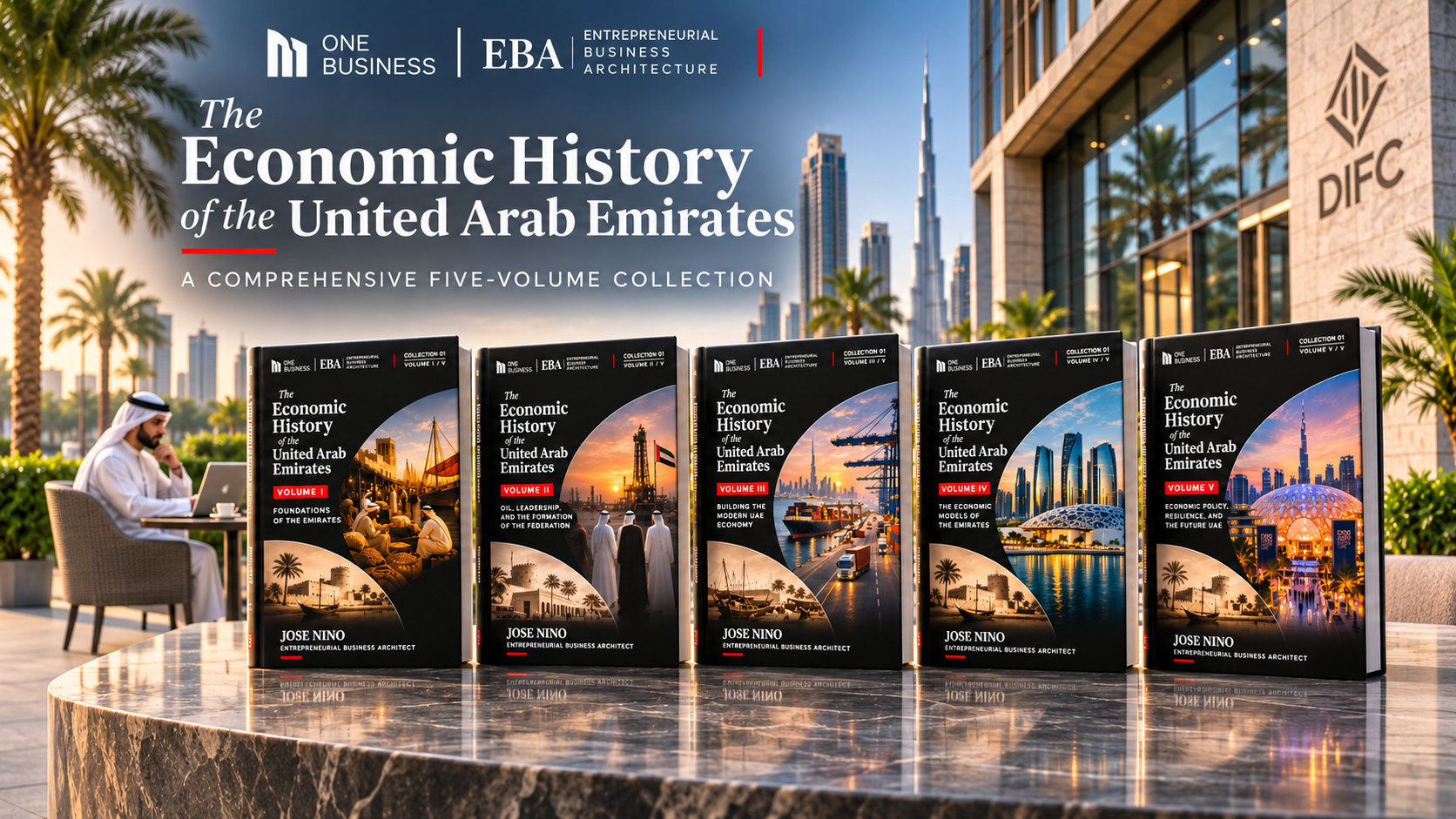
Explore The Economic History of the United Arab Emirates — Complete Collection
Ras Al Khaimah demonstrates that entrepreneurship in the UAE cannot be reduced to one model of business formation. Industrial production, ports, tourism, technology, and specialized jurisdictions create different possibilities for founders with different capabilities and goals. The relevant lesson is to connect the choice of jurisdiction with the actual economic function of the enterprise. The legal structure, facilities, permissions, commercial relationships, and financial preparation must support the activities through which the company intends to create value. Attractive infrastructure and efficient administrative services help create possibilities, but customers, organizational competence, and reliable execution determine whether those possibilities become successful businesses.
ONE Business Dubai helps international founders establish the corporate foundation for this process through professional UAE company formation services for USD 1,200 plus applicable government and licensing fees. Eligible applicants can explore same-day registration arrangements according to the relevant authority's procedures and approvals.
Start Your UAE Company Formation with ONE Business Dubai
The economic opportunity presented by Ras Al Khaimah belongs to a broader story of national development. The United Arab Emirates has created distinct centers of economic activity, each shaped by historical circumstances and capabilities developed over time. Understanding that diversity helps entrepreneurs recognize opportunities more accurately and make informed decisions about location, structure, and enterprise development. Understand the Economy. Discover the Right Opportunity. Establish the Right Company. Build the Capabilities for Entrepreneurial Success.
ONE Business Dubai — Entrepreneurial Business Architecture, Economic Knowledge, and UAE Company Formation.
This publication provides economic analysis and entrepreneurial education. Availability, pricing, timing, and regulatory requirements of company formation depend on the selected jurisdiction, proposed activities, documentation, and relevant authority approvals. Corporate banking, taxation, immigration, and regulated activities require separate assessment.